An AC condenser not turning on in Milpitas, CA almost always comes down to one of a handful of fixable problems: a tripped breaker, a dead capacitor, a blocked airflow path, or a utility signal cycling your compressor off without you knowing it. Most of these take less than ten minutes to rule out. Here's exactly where to look first, in the order that actually matters.
Common Reasons an AC Condenser Won't Turn On
The outdoor condenser's job is simple on paper: pull heat out of the refrigerant and release it outside. It needs power, a control signal, and a handful of small components working together to do that. When any one of those links breaks, the unit sits silent even though your thermostat says it should be running.
Tripped Circuit Breaker or Blown Fuse
A tripped breaker is one of the most common reasons an AC condenser won't turn on. The outdoor unit draws a heavy startup surge every time the compressor kicks in, and that surge can overload a weak circuit.
Because the indoor blower often runs on a separate breaker, your fan can keep blowing room-temperature air while the outdoor unit stays completely dead.
Here's the decision rule worth following: reset it once. If it trips again within an hour, or trips more than twice in a day, stop resetting it.
If an appliance or circuit repeatedly trips a breaker or blows a fuse, the standard safety guidance is to stop using it and have it checked rather than keep resetting it. A repeat trip usually signals a short or an overloaded circuit, not a fluke.
Failed Capacitor or Contactor
The capacitor stores the electrical charge that gives the compressor and condenser fan motor the jolt they need to start spinning. The contactor is the relay switch that completes the high-voltage circuit once your thermostat calls for cooling.
When either one fails, you'll usually hear one of three things:
- A humming unit with no fan movement
- A rapid clicking sound
- Nothing at all
These parts are not a homeowner-safe DIY repair. Capacitors hold a stored electrical charge even after the system is powered off, and mishandling one can cause a serious shock. If you suspect a capacitor or contactor issue, it's a job for AC repair technicians rather than something to open up yourself.
A PG&E Demand-Response Signal, Not a Breakdown
Here's a cause most troubleshooting guides skip entirely, and it's specific to Milpitas and the rest of PG&E's service territory. If you're enrolled in PG&E's SmartAC program, a small switch mounted near your condenser can cycle the compressor off during high-demand summer afternoons.
During periods of high demand, usually the hottest days from May through October, PG&E may call an event that cycles an enrolled air conditioner or heat pump compressor off for defined intervals. The fan keeps running, but the compressor pauses in 15-minute blocks, which can look exactly like a no-start fault if you forgot you enrolled.
Before you assume the worst, check whether your household signed up for SmartAC or a similar incentive program. If so, the "failure" may resolve itself once the event window ends.
Quick Diagnostic Reference
| Symptom | Likely Cause | Safe to DIY? |
|---|---|---|
| Fan runs inside, nothing outside | Tripped breaker, disconnect off, or demand-response event | Yes, check first |
| Condenser hums, fan won't spin | Weak capacitor or seized fan motor | No, call a technician |
| Rapid clicking at the unit | Failing contactor | No, call a technician |
| Unit shuts off after a few minutes | Dirty coils, blocked airflow, or overheating | Yes, clean and clear debris |
| Nothing happens at all, breaker holds | Low-voltage control fault or bad thermostat wiring | Call a technician |
Troubleshooting Steps You Can Safely Try
Before scheduling a repair, run through this checklist. None of these steps require opening an electrical panel, and they solve the problem outright more often than homeowners expect.
- Confirm the thermostat is actually calling for cooling. Set it to "Cool" and at least 5 degrees below room temperature, then wait a few minutes before assuming the outdoor unit is at fault.
- Check the outdoor disconnect switch.
- Try one reset.
- Clear debris from the coils and surrounding area.
Inspect the Outdoor Disconnect Switch
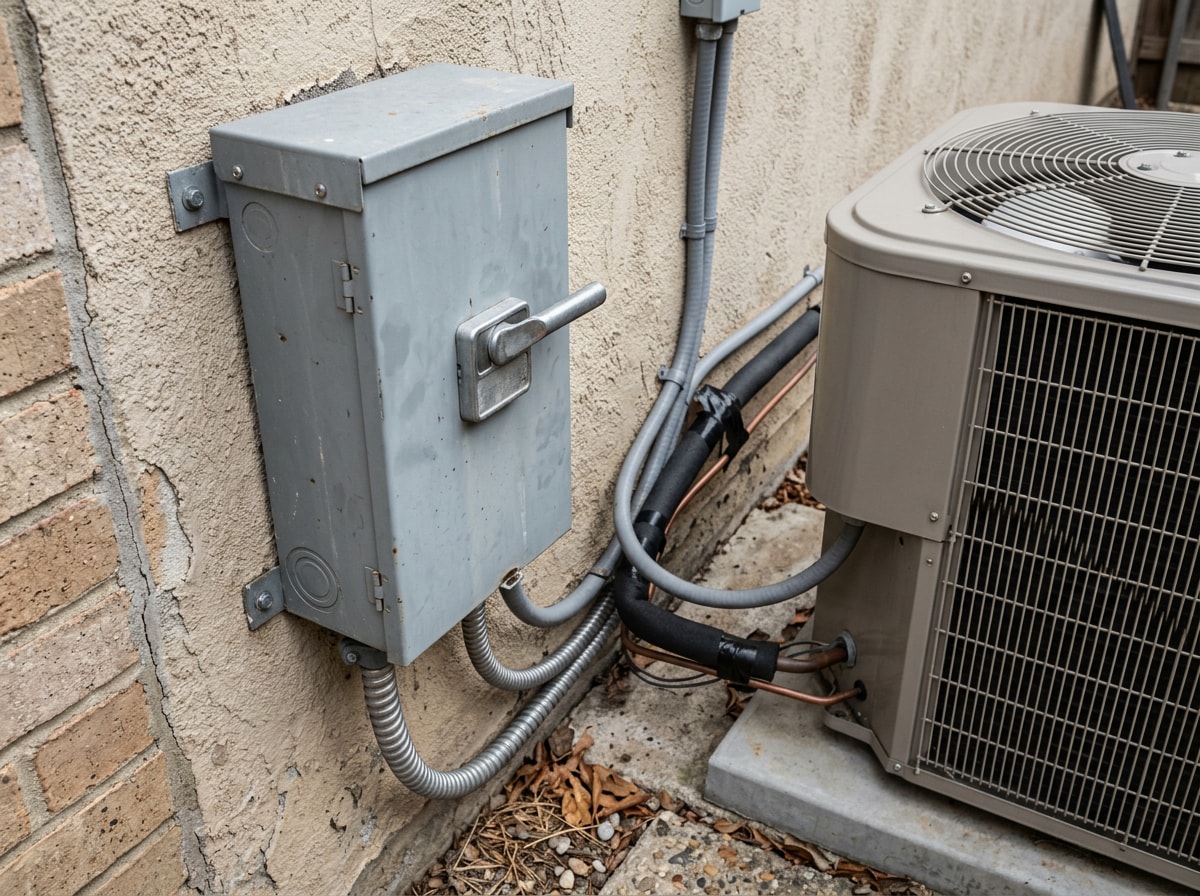
The outdoor disconnect switch is usually mounted in a small gray metal box on the wall right next to the condenser. Confirming it's pushed fully to the "on" position is the fastest way to rule out an accidental shutoff.
Some older Milpitas homes still use a pull-out fuse block instead of a lever switch. If yours does, make sure the block is firmly seated and the fuse inside hasn't blown.
Locate and Press the Reset Button
Many newer condenser units have a small red or yellow reset button on the housing, often near the electrical access panel. Press it firmly, hold for a few seconds, then wait to see if the unit kicks on.
If your system doesn't have a dedicated reset button, cycling the breaker as described above serves the same purpose. That's effectively how you reset an AC condenser on older equipment.
Clean the Condenser Coils and Clear Airflow Blockage
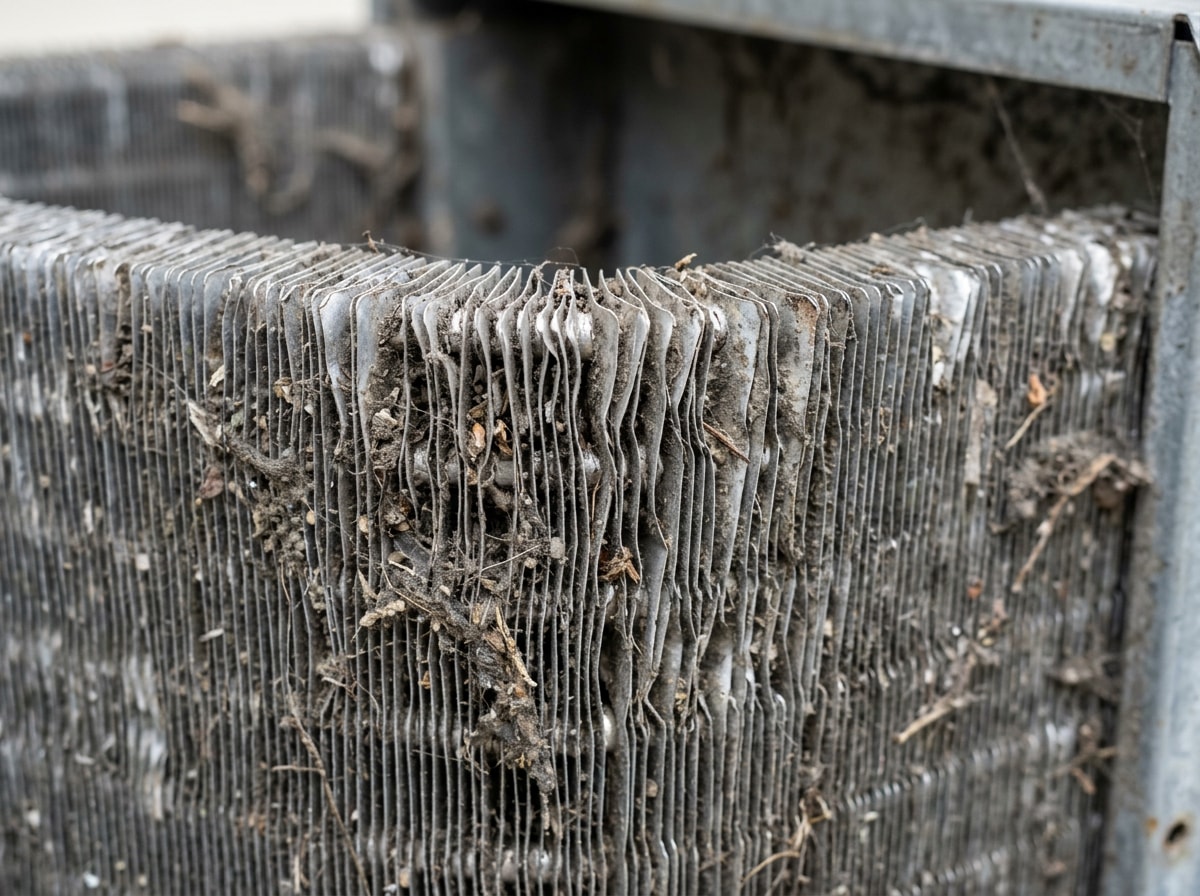
A dirty condenser or blocked airflow path can trigger an automatic overheating shutdown. The unit senses it can't release heat properly and protects itself by refusing to run.
Condenser coils caked with dust, pollen, or landscaping debris trap heat against the unit. Overgrown shrubs or stored items too close to the cabinet make the problem worse.
Maintain at least two feet of clearance on all sides of the outdoor unit for proper airflow , and gently hose off visible debris from the coil fins when the system is powered off. This clearance habit is part of the U.S. Department of Energy's standard air conditioner maintenance guidance, and it matters year-round, not just during a no-start event.
What a Licensed Technician Checks When the Condenser Still Won't Start
Once you've confirmed power, tried a single reset, ruled out a demand-response event, and cleared obvious debris, a technician takes over with a more structured diagnostic sequence instead of guessing part by part.
A typical visit starts with verifying voltage is actually reaching the unit, then checking the low-voltage signal from the thermostat to confirm the condenser is receiving a call for cooling at all. From there, the technician tests the capacitor and contactor directly with a meter and measures the amp draw on the compressor and fan motor to see if either is pulling too much current or none at all.
This is also where licensing matters more than homeowners expect. Many Milpitas homes, particularly older properties with original electrical panels and disconnects, have components that have aged well past their expected service life, which makes amperage testing and part replacement more nuanced than a quick swap.
If refrigerant needs to be accessed at any point, federal law requires a certified technician to handle it. EPA regulations under Section 608 of the Clean Air Act require that technicians who maintain, service, repair, or dispose of equipment that could release ozone-depleting refrigerants must be certified. You can confirm certification requirements directly on the EPA's Section 608 program page.
If the compressor itself has failed, which is more common on units already past the 12-to-15-year mark, ac replacement usually costs less over time than repeatedly repairing an aging sealed system. Our guide to choosing AC units in Milpitas walks through sizing and pricing if you reach that point.
If your checklist above didn't solve the problem, that's a reasonable point to stop testing components on your own. Get a free estimate and have a technician diagnose the unit before the next heat wave hits. Routine coil cleaning and electrical checks through scheduled air conditioner maintenance also catch most of these failures before they turn into a no-start emergency. Learn more about our full approach on the homepage.
FAQ
Why is my AC condenser not kicking on?
The most common causes are a tripped breaker, a disconnect switch left off, a failed capacitor or contactor, or an overheating shutdown from a dirty condenser. Work through the power source first, then the components, before assuming a bigger repair is needed.
Why is my outside AC unit fan not running but the inside is?
This happens because the indoor blower and outdoor condenser typically run on separate circuits and components. If the outside unit isn't turning on while the indoor fan keeps running, check the outdoor breaker, disconnect switch, capacitor, and contactor.
Why is my AC condenser humming but not starting?
A humming unit that won't spin usually points to a weak or failed capacitor, or occasionally a seized fan motor trying and failing to start. If you hear this sound, shut the system off at the thermostat rather than letting it keep trying, since a struggling motor can overheat.
How do I reset my AC condenser?
Turn the outdoor breaker fully OFF, wait about 30 seconds, then switch it back ON, and confirm the outdoor disconnect is in the "on" position. Reset once. If it trips again quickly, call a technician instead of repeating the cycle.
Does my AC condenser have a reset button?
Many newer units do, usually a small red or yellow button near the electrical access panel on the outdoor cabinet. Older units typically don't have one, so cycling the breaker serves the same purpose.
Can a dirty air filter cause my AC condenser to stop working?
Indirectly, yes. A clogged air filter restricts airflow across the indoor coil, which can freeze it solid. Once that ice melts and floods the system, some units shut down entirely as a safety measure.
Why does my outdoor unit stop running during a heat wave even though nothing seems broken?
If you're enrolled in PG&E's SmartAC program, the utility can cycle your compressor off in 15-minute intervals during high-demand event days. Check your enrollment status before assuming the unit has failed.