Typing "AC rental near me" into Google in Palo Alto, CA usually means one thing: something broke, and it's hot right now. Maybe your central air quit mid heatwave, or a server closet is running warm enough to worry you. A portable rental can be running in your space the same day, but it's worth knowing what you're actually renting, what it costs, and when a repair call is the smarter move.
This guide covers where Palo Alto renters and businesses actually find portable AC units, how to size one correctly, what to check before delivery day, and when calling an HVAC contractor beats paying for a rental week after week.
Visit Made Simple Heating & Air, Inc. to see our services and request a free estimate.
Where to Actually Find an AC Rental Near Palo Alto, CA
A few national equipment-rental chains operate Bay Area branches that stock portable AC units ranging from 1 ton to 12+ tons, enough to cool a single bedroom or an entire commercial floor. A handful of independent tool-rental shops in Redwood City and San Jose also carry smaller residential units for homeowners who just need to get through a hot week.
Delivery timelines vary by provider and by how far they're routing from. Some companies advertise 90-minute delivery windows, but Peninsula traffic makes same-day delivery the more realistic promise rather than a guarantee.
Palo Alto's housing stock adds to demand here. Many homes built before central air conditioning became standard have none at all, and a multi-day heat spike can leave an uninsulated older house uncomfortably warm fast. On the commercial side, tech offices running server racks or lab equipment sometimes need supplemental cooling to keep equipment from overheating, independent of whether the building's main HVAC system is working fine.
Before you call around, check our Palo Alto service area page for context on what's typical in this market, and compare that against current conditions on the National Weather Service's San Francisco Bay Area forecast page, which posts active heat advisories during summer months.
Sizing a Portable AC Unit for Your Space
Getting the size right matters more than most people expect. An undersized unit runs constantly and still can't keep up; an oversized one cycles on and off without properly dehumidifying the room.
To calculate how large a unit to buy, you need to know the size of the room to be cooled. For example, if the room measures 525 square feet, look for a qualified air conditioner with a capacity of 14,000 Btu/hr.
| Room Size (sq ft) | Recommended Capacity | Typical Use Case |
|---|---|---|
| 100–150 | 5,000 BTU | Small office nook |
| 300–350 | 8,000 BTU | Single bedroom |
| 400–450 | 10,000 BTU | Larger bedroom, small server closet |
| 450–550 | 12,000 BTU (1 ton) | Home office, open bedroom |
| 500–700 | 14,000 BTU (1.5 ton) | Open-concept living area, retail floor, restaurant |
If the room is heavily shaded, reduce capacity by 10 percent. If the room is very sunny, increase capacity by 10 percent. A west-facing Palo Alto living room with afternoon sun will need more cooling power than this chart suggests on its own.
For a deeper look at how commercial-scale sizing plays out for local businesses, see our guide on temporary air conditioning rental in Milpitas, which covers the same math at a larger scale.
What to Check Before the Unit Arrives
Renting a portable AC is simpler than a full HVAC install, but two things determine whether it actually works once it's in your space.
- Power. Most residential units plug into a standard 115-volt outlet. Larger commercial units often need 208–230V service, which may mean involving an electrician before delivery day.
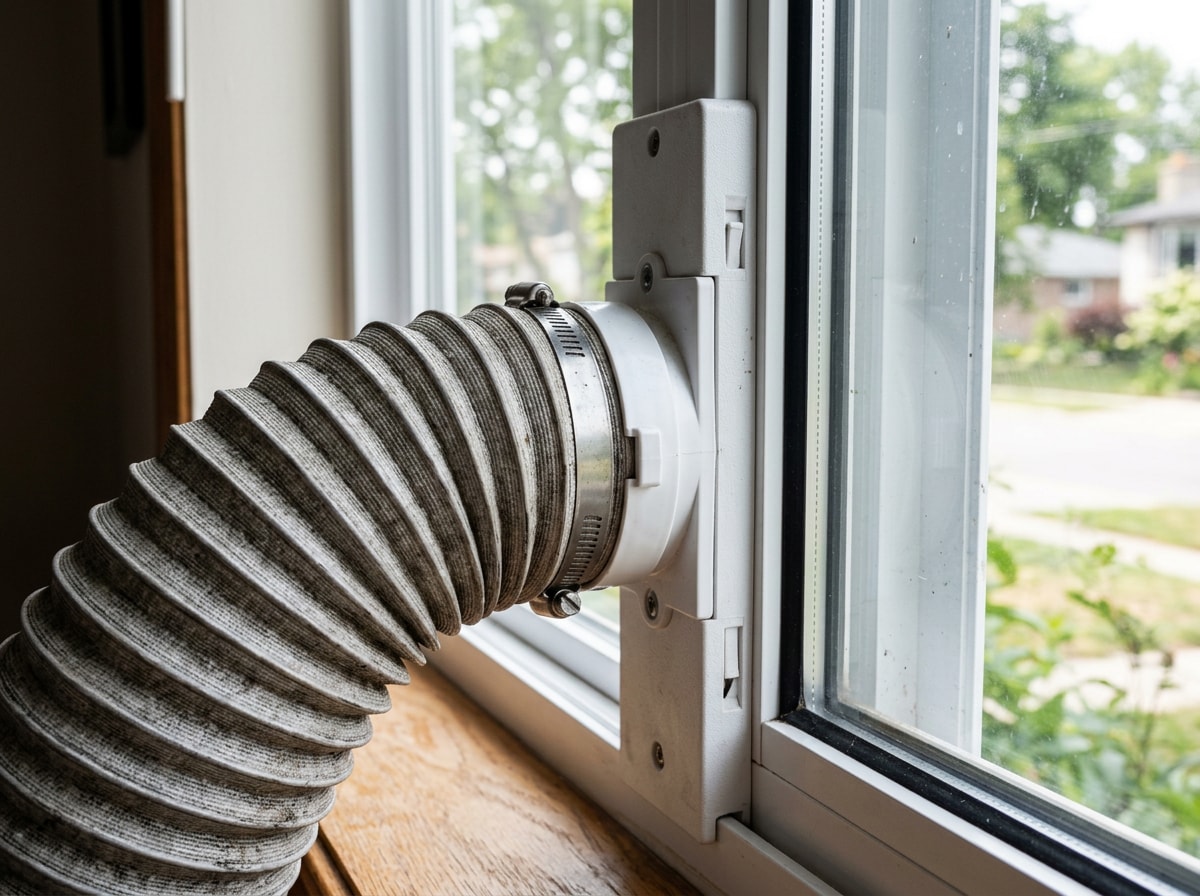
- Ventilation. Portable units pull in room air, cool it, and push leftover heat out through an exhaust hose, usually run through a window, a drop ceiling, or a wall port. If there's no practical way to vent, a water-cooled unit is the workaround, since it sends heat into a water line instead of outside air.
- Room volume, not just floor space. Multiply length by width by ceiling height. A 20-by-15-foot room with 9-foot ceilings is 2,700 cubic feet, and a single oversized unit often works worse than two correctly sized ones spread across adjoining rooms.
- Amperage of the circuit. Confirm your outlet's amperage before the unit shows up. A 115V/15-amp household circuit handles most small units, but anything larger needs confirmation ahead of time, not a surprise on delivery day.
Rental vs. Repair: When to Call an HVAC Contractor Instead
A rental buys time. It doesn't fix the reason your space got hot in the first place.
If your central AC failed and you're renting a portable unit to get through the week, the math is worth running. Daily rental rates for a small residential unit commonly start in the $35 to $90 range industry-wide, and weekly rentals usually add up faster than people expect once you include delivery fees. If your system needs a straightforward repair, that cost can land close to, or less than, a week or two of rental fees, with the added benefit of your permanent system working again. Our AC repair team can usually diagnose the issue same-week, and if the unit is genuinely at the end of its life, AC replacement is often a better long-term investment than another summer of rentals.
For businesses, the calculation is different. California adopted a heat illness prevention standard for indoor workplaces, which applies to most workplaces where the indoor temperature reaches 82°F, and it went into effect on July 23, 2024. That rule changes the equation for Palo Alto offices and labs that previously treated AC outages as a comfort issue rather than a compliance one. A rental can get you compliant today; a properly sized, maintained system keeps you there without a recurring invoice.
If you're not sure whether your situation calls for a stopgap rental or a service call, our team can walk through it with you. Get a Free Estimate and we'll help you figure out which option actually saves money.
We also cover ongoing upkeep so you're not back in this position next summer. Our AC maintenance plans catch refrigerant leaks and failing components before they turn into a mid-July emergency, and our refrigerant leak repair service handles one of the most common reasons a system suddenly stops cooling.
Palo Alto Considerations Worth Knowing
Older Eichler-era homes and mid-century houses around Palo Alto often lack central air entirely, which is part of why portable rentals see steady demand here during heat spikes rather than just emergencies. On the commercial side, open-plan tech offices with dense equipment loads can overheat even when the building's main system is functioning normally, simply because the heat load in one zone outpaces what the system was designed for.
If ductwork is part of the problem, uneven airflow or poor sealing can make one room run hot while the rest of the building stays comfortable. Our duct sealing and duct inspection services address that root cause instead of just masking it with a rented unit in the worst-affected room.
Made Simple Heating and Air ({{SITE_URL}}/) works across Palo Alto, Mountain View, Redwood City, and the rest of the Peninsula, and our dispatch team sees this exact pattern every summer: a rental gets someone through the week, then a quick repair call prevents a repeat next year.
FAQ
What Is a Portable AC Rental and How Does It Work?
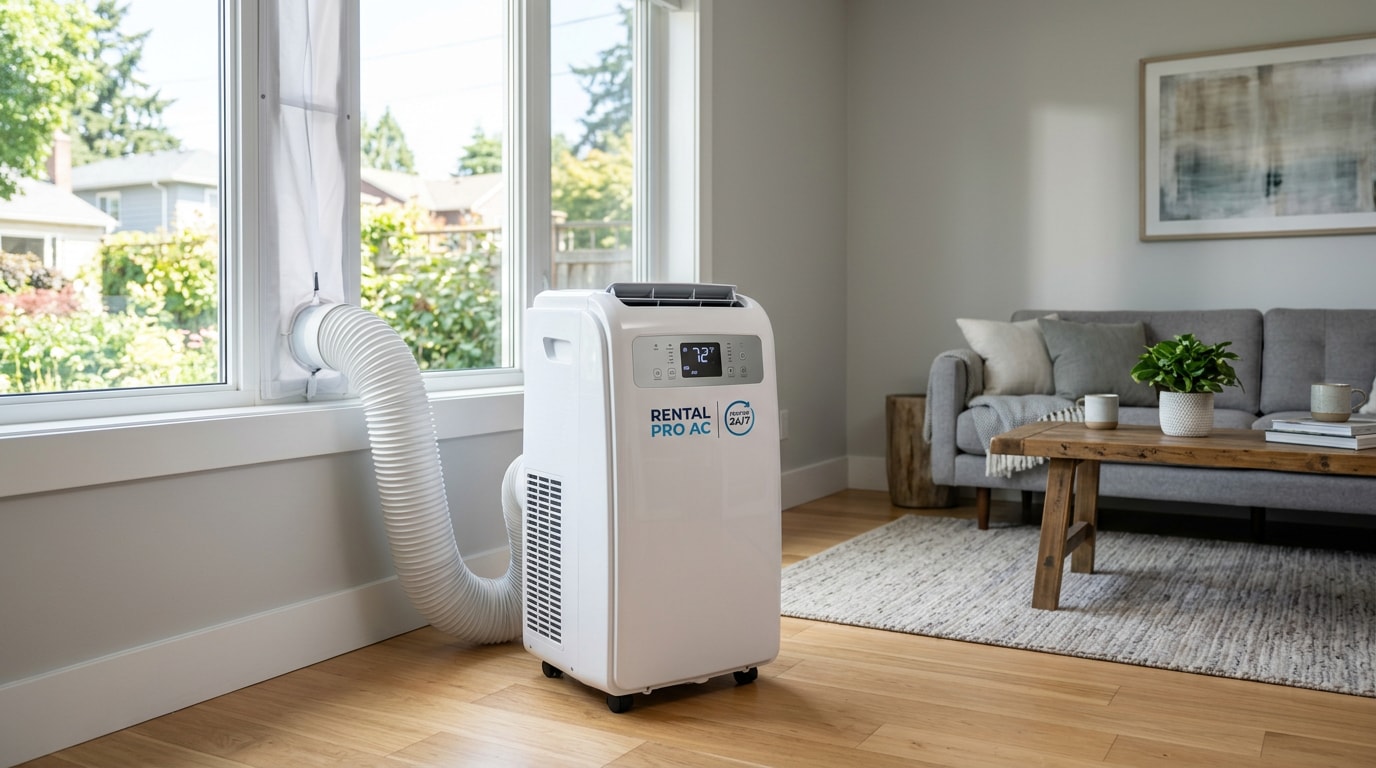
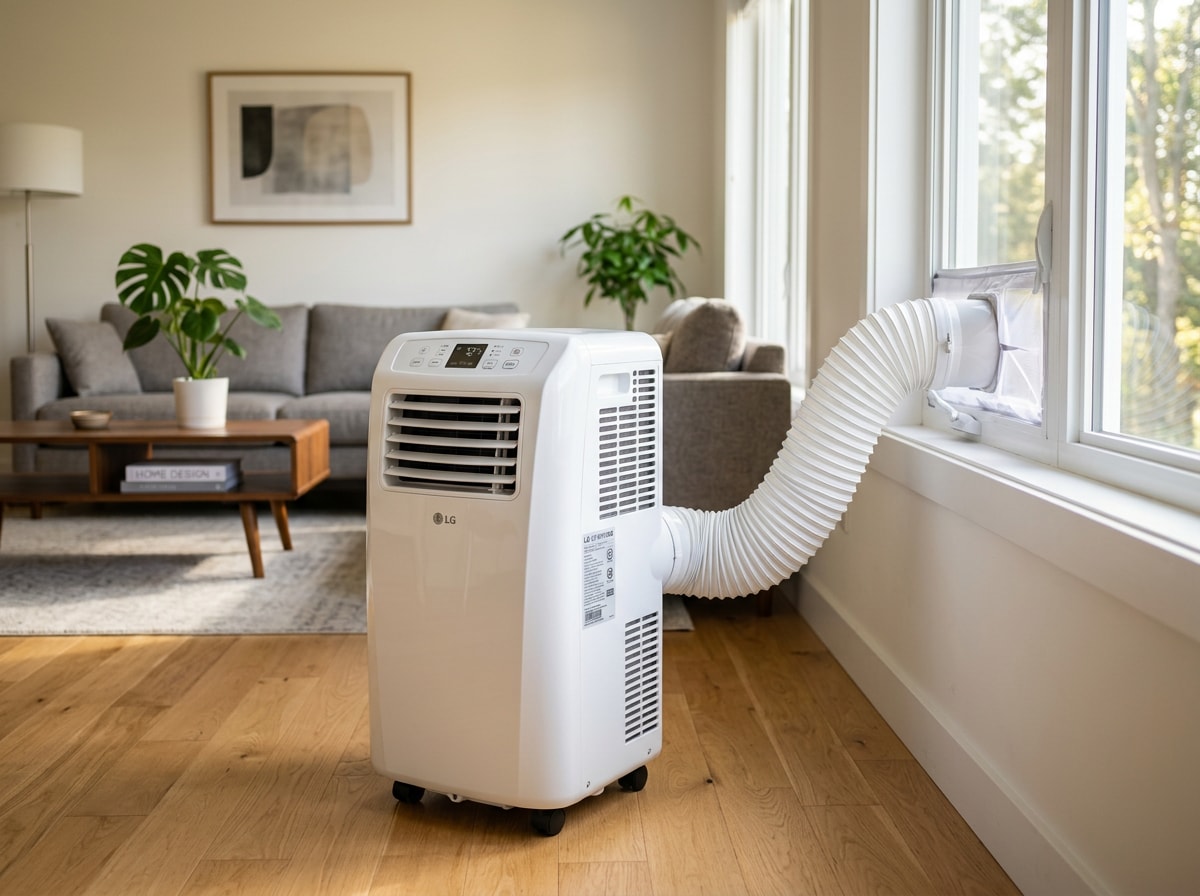
A portable AC rental is a freestanding, wheeled cooling unit that's delivered, set up, and later picked up by the rental company, with no permanent installation involved. It cools a room directly and vents warm exhaust air outside through a hose, typically run through a nearby window.
How Much Does a Portable AC Rental Cost?
Pricing scales with unit size and provider. Small residential units commonly run in the $35 to $90 per day range, while larger commercial units cost more. Most companies offer a discounted weekly rate once you're past five to seven days, so it's worth asking before you commit to daily billing.
Should I Rent a Portable AC or Just Buy a Window Unit?
A rental usually makes more sense for temporary needs. Window units require installation, don't fit every window type, and often end up stored in a garage once the repair is done. A rental gets delivered, set up, and removed when you're finished, with no leftover equipment to deal with.
Is It Cheaper to Rent a Portable AC or Repair My Central Air?
It depends on the repair. A simple fix, like a capacitor replacement or refrigerant top-off, often costs less than two weeks of rental fees and solves the problem permanently. A full system failure is a different calculation, and that's where a free estimate helps before you decide.
How Long Does Delivery Take in Palo Alto?
Most providers promise same-day or next-day delivery for the Peninsula, though exact timing depends on their route and current demand. During active heat advisories, call early in the day since providers book up fast.
Do I Need a Permit to Use a Portable AC Rental at Home?
No. A temporary, plug-in portable unit doesn't require a permit for short-term residential use. Permanent installations, like a new condenser or ductwork changes, do require permits, which is one more reason a quick rental often makes sense while you schedule permanent work.
Do I Need to Set Up the Portable AC Myself Once It Arrives?
Most rental companies handle positioning the unit, running the exhaust hose, and sealing the window kit before they leave, so it's cooling the moment they walk out the door. If you'd rather skip the rental step entirely and get a technician out to repair or replace your system, request a quote and our team will confirm timing for your address.