An air conditioning parts store in Cupertino, CA is only useful if you walk in with the right part number already confirmed. Buying the wrong capacitor or an incompatible control board means a second trip, a restocking fee, or a system that still won't cool. This guide breaks down what to check before you buy, which parts are stocked versus special-order, and when a swap is safe to do yourself versus when it calls for a licensed technician.
Before You Buy From an Air Conditioning Parts Store in Cupertino
Confirm these three things before you check out:
- Brand and model match. The part number needs to match your system's exact brand, tonnage, and model year, not just the general category.
- OEM or aftermarket. Decide upfront whether you want a manufacturer-made part or a third-party equivalent, since the answer affects cost and warranty coverage.
- DIY-safe or technician-only. Filters and thermostats are simple swaps. Anything touching refrigerant, high voltage, or the compressor circuit is not.
A dependable HVAC parts supplier should walk you through all three before you leave with a part in hand.
AC Problems That Usually Point to a Specific Part
Certain symptoms point to specific failing parts. Recognizing the pattern helps you shop smarter or know when to call a technician instead.
AC Blowing Warm or Hot Air
Warm air from the vents usually traces back to one of three parts:
- A refrigerant leak starving the system of cooling capacity
- A failed capacitor preventing the compressor from running at full strength
- A dirty condenser coil blocking heat transfer
Checking these three first narrows down the cause before you replace anything.
AC Won't Turn On
If the system won't power on at all, the likely culprits are:
- A blown capacitor
- A tripped or corroded contactor
- A failed control board
- A miscommunicating thermostat
These parts control power delivery to the compressor and fan, so testing them in that order usually finds the fault fastest. In our service calls across Cupertino, a failed run capacitor is the single most common reason a system stops cooling. It is inexpensive, but it stops a compressor cold the moment it fails.
Parts We Stock and Parts We Special-Order in Cupertino
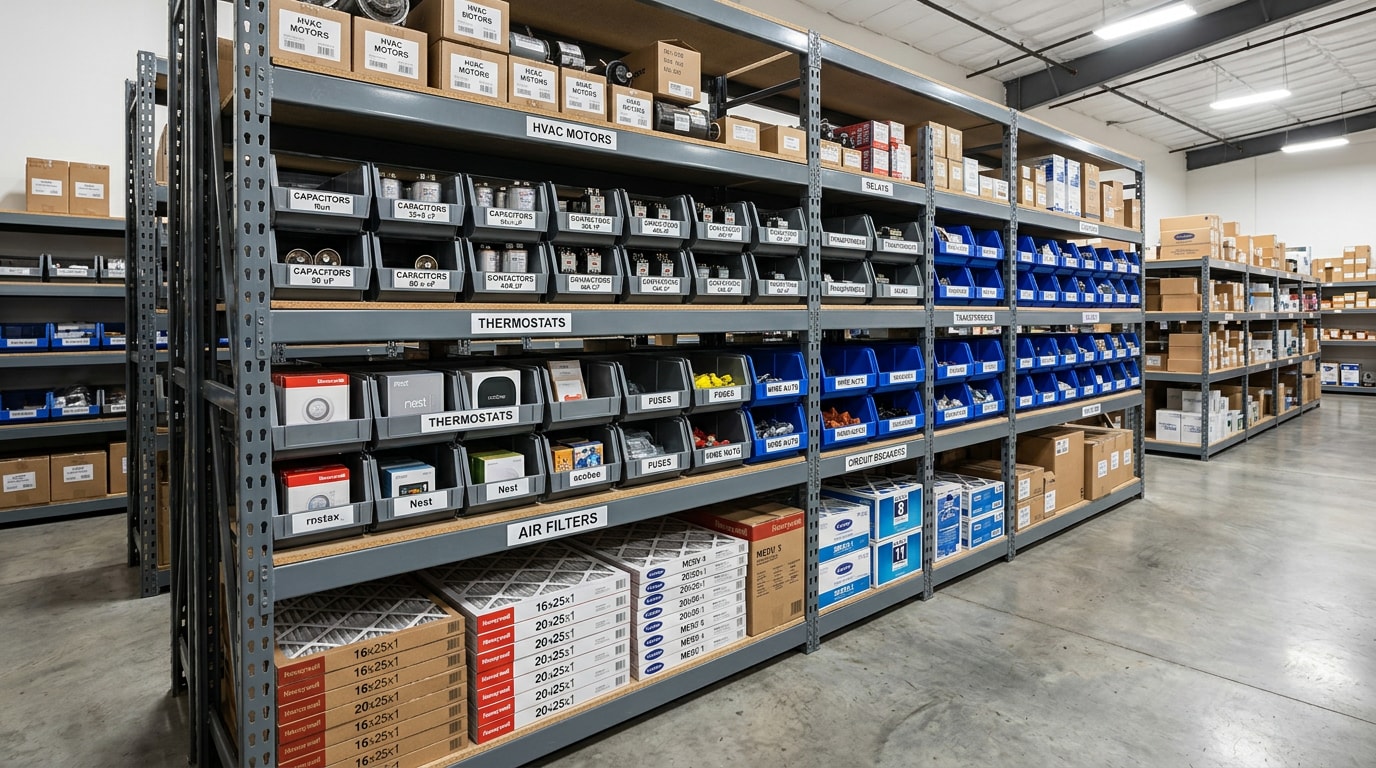
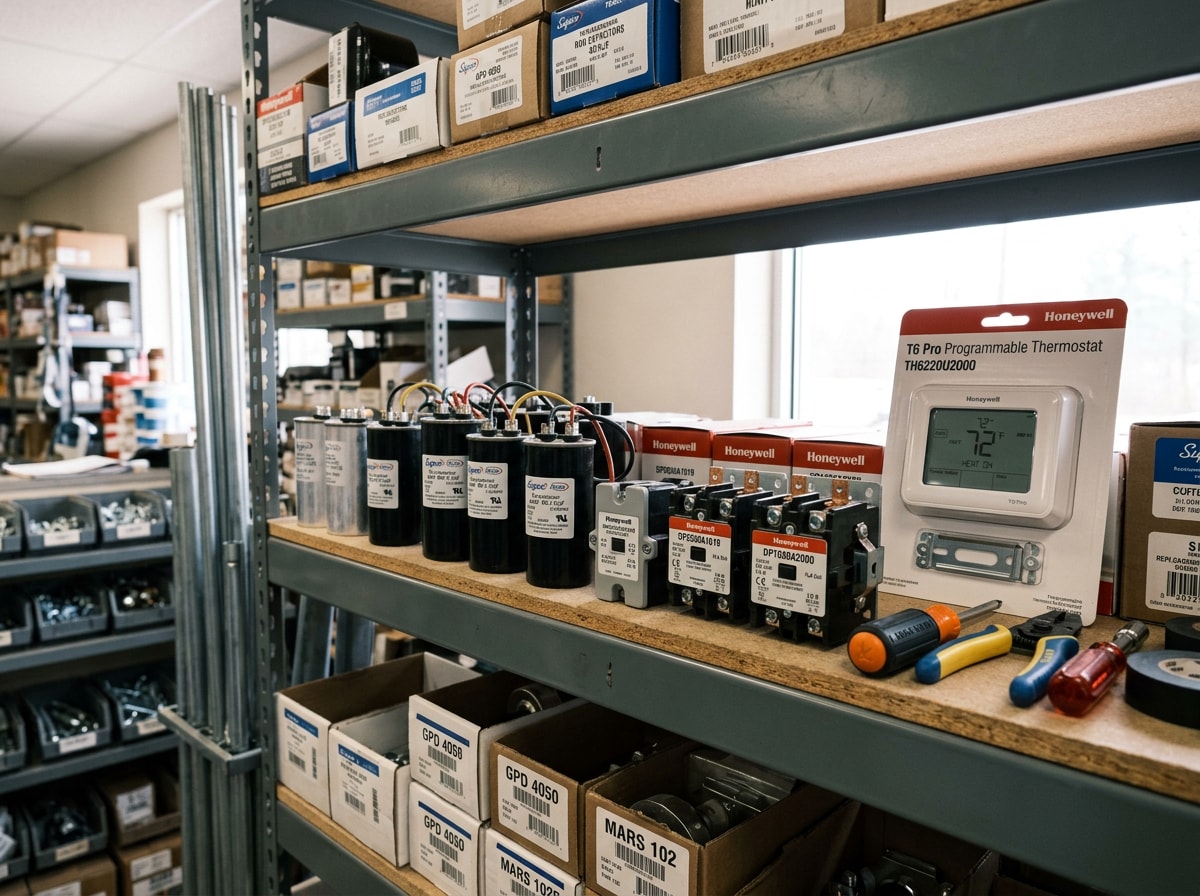
A well-stocked air conditioning parts store in Cupertino carries a wide range of AC components, though not everything sits ready on the shelf.
Usually available same-day:
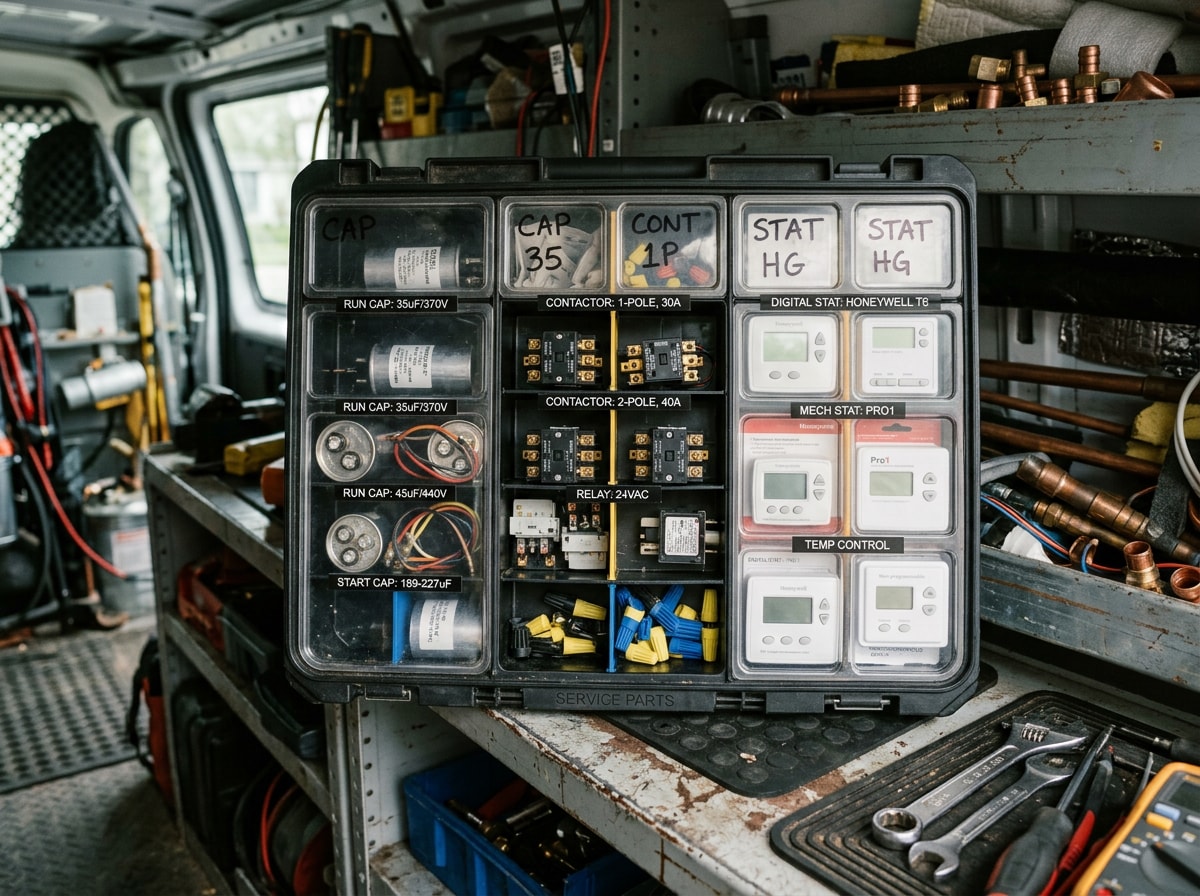
- Capacitors and contactors
- Thermostats
- Filters
- Basic hand tools
Usually special-order:
- Compressors
- Evaporator and condenser coils
- Specialty duct sealants
Larger or system-specific components fall into the special-order bucket because they vary by brand, tonnage, and refrigerant type. Browse our air conditioning store services to see what's typically on hand before you plan a trip.
OEM vs. Aftermarket AC Parts: Which Should You Buy
OEM stands for original equipment manufacturer, meaning the part is built by, or under license from, the company that made your AC system. Aftermarket parts come from third-party manufacturers designed to fit multiple brands instead of one.
| Factor | OEM Parts | Aftermarket Parts |
|---|---|---|
| Upfront cost | Higher | Lower |
| Fit tolerance | Matches exact electrical and airflow specs | Close fit, varies by brand |
| Warranty impact | Keeps manufacturer warranty intact | May void warranty if linked to a failure |
| Best for | Newer systems still under warranty | Older systems, out-of-warranty repairs |
Before buying either option on a system that still has warranty coverage, it helps to check how the part is rated. The AHRI Directory of Certified Product Performance is the trusted source for performance certified HVACR equipment, where contractors and consumers can search by product lines, certified ratings, or brands . Checking a component against that directory is worth the five minutes, especially on a system where warranty protection still carries real value.
Getting the Part Installed Correctly
Buying the right part is only half the equation. Getting it properly matched and installed is what actually fixes your system. Our air conditioner repair team handles both ends of that process for Cupertino homeowners, and our AC replacement crew steps in when a part failure signals it's time for a new unit instead.
If you'd rather skip the guesswork entirely, get a free estimate and have a technician diagnose, source, and install the correct part in one visit.
Common AC Parts We Replace
| Part | Common Failure Cause | Typical Stock Status |
|---|---|---|
| Capacitors & contactors | Heat cycling, age, power surges | Same-day |
| Blower motors | Worn bearings, electrical failure | Same-day to 1-2 days |
| Condenser coils | Corrosion, physical damage | Special-order |
| TXV valves | Refrigerant contamination, age | Special-order |
| Circuit boards | Power surges, moisture | Special-order |
| Refrigerant (recharge) | Leaks, line damage | Depends on refrigerant type |
Mismatching a part to your system's refrigerant type can create bigger problems later, which is why refrigerant type deserves its own look.
R-22 vs. R-410A: Refrigerant Rules That Affect Your Cost
Refrigerant type matters more than most homeowners expect. Older systems often run on R-22, while newer systems use R-410A.
HCFC-22, also known as R-22, has been the most common refrigerant in residential heat pumps and air-conditioning systems for many decades, and as it's phased out, manufacturers now offer equipment using ozone-friendly refrigerants. Production cuts happened gradually: production and import of HCFC-22 fell to 75 percent below baseline by 2010, then to 99.5 percent below baseline by 2020 under the EPA's phaseout schedule. That squeeze is why R-22 recharges and TXV valve swaps on older systems often cost more than the same job on an R-410A system.
The good news for homeowners with an older unit: units installed before 2010 can continue to be serviced with HCFC-22, and there is no EPA requirement to get a new system or convert existing units to a substitute refrigerant. You're not forced into a replacement, just a pricier recharge if a leak shows up.
Refrigerant work also isn't a DIY job. EPA regulations under Section 608 of the Clean Air Act require that technicians who maintain, service, repair, or dispose of equipment that could release ozone-depleting refrigerants into the atmosphere must be certified. If a leak is the issue, our refrigerant leak repair service handles detection and certified recharge together.
Same-Day Stock vs. Special-Order: How Fast You'll Get Your Part
Capacitors, contactors, and thermostats are usually in stock for same-day pickup, since they fail most often and can't wait on a special order. Coils, compressors, and brand-specific control boards typically take longer because they're ordered to match your exact system.
For a sense of how parts and labor costs stack up on a full system, our guide to central air conditioning installation costs in Cupertino breaks down real numbers homeowners are seeing in 2026. You can also browse our HVAC contractor services or call ahead to confirm what's on the shelf before making the trip.
Serving All Cupertino Neighborhoods
Whether you're near Monta Vista, Rancho Rinconada, or Cupertino Village in the 95014 corridor, a local AC parts source should already know the common system brands and refrigerant types found in these neighborhoods. We serve homeowners throughout Cupertino, keeping parts stocked to match what's actually installed nearby. Visit Made Simple Heating and Air to see our full service area and current offers.
Frequently Asked Questions
How Much Does AC Repair Cost in Cupertino?
Cost depends on the part needed and the labor involved. Simple components like capacitors cost far less than compressors or coils, and labor adds a separate, variable charge.
Should I Repair or Replace My AC Unit?
Compare the part's cost to your unit's age and value. A failing capacitor on a newer system is usually worth fixing. Multiple major part failures on an older unit often favor replacement.
Do You Repair All AC Brands in Cupertino?
Most major residential AC brands have readily available parts. Older or less common systems sometimes require a special-order component, adding a few days to turnaround.
Can I Buy AC/HVAC Parts Without a License?
Most common parts, like capacitors, motors, thermostats, and filters, don't require a license to purchase. Refrigerant is different: federal rules require certification to handle it, as noted in the refrigerant section above.
Where Can I Buy Air Conditioner Parts Near Me in Cupertino?
Local options generally include an air conditioning parts store, select hardware stores, and authorized distributors. Calling ahead to confirm stock on your specific part saves a wasted trip.