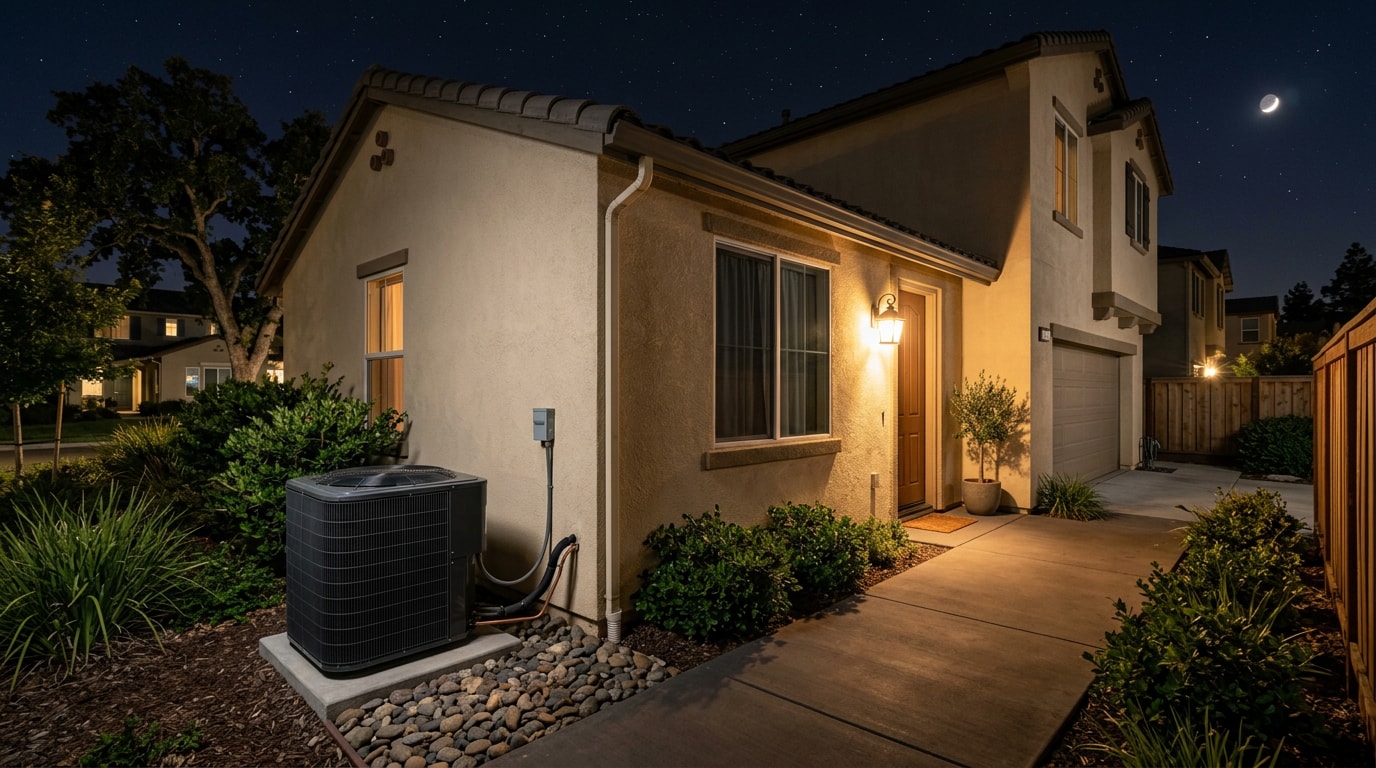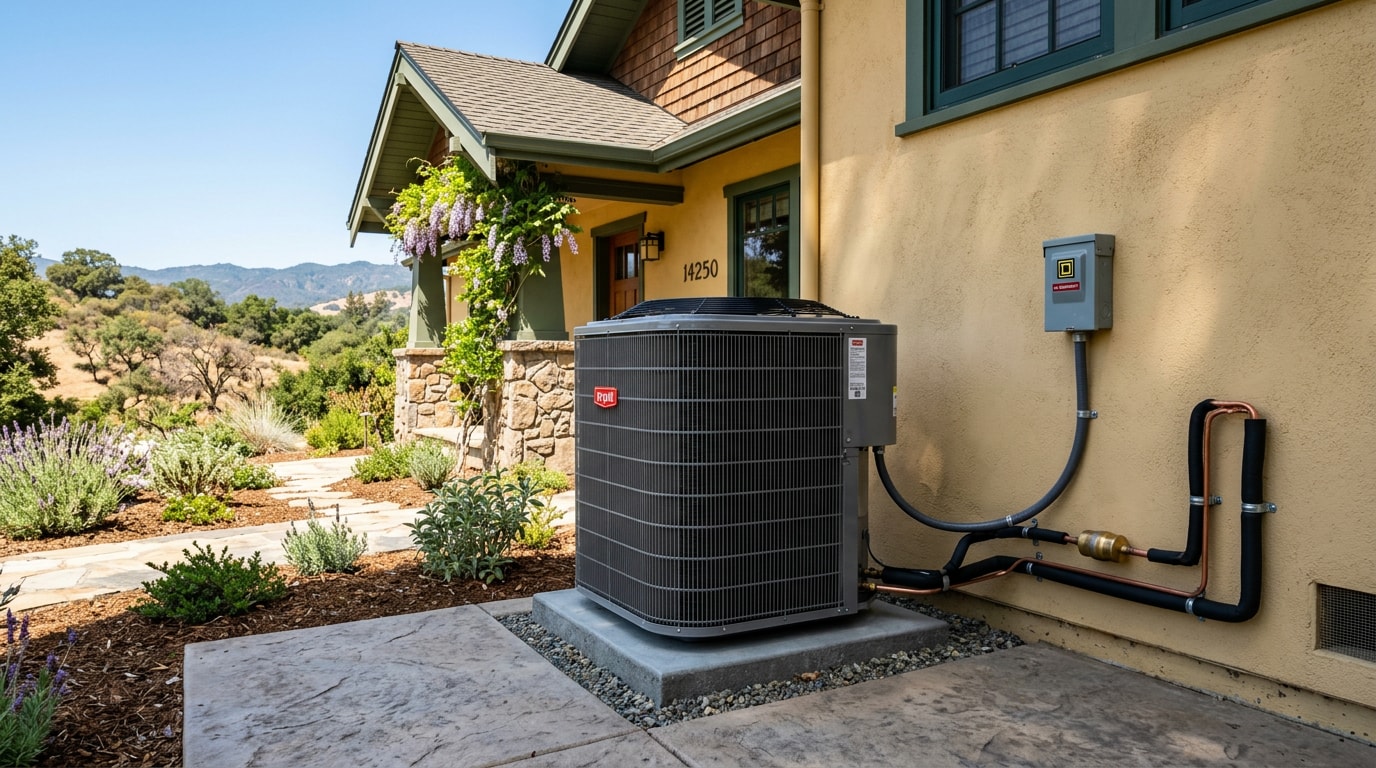
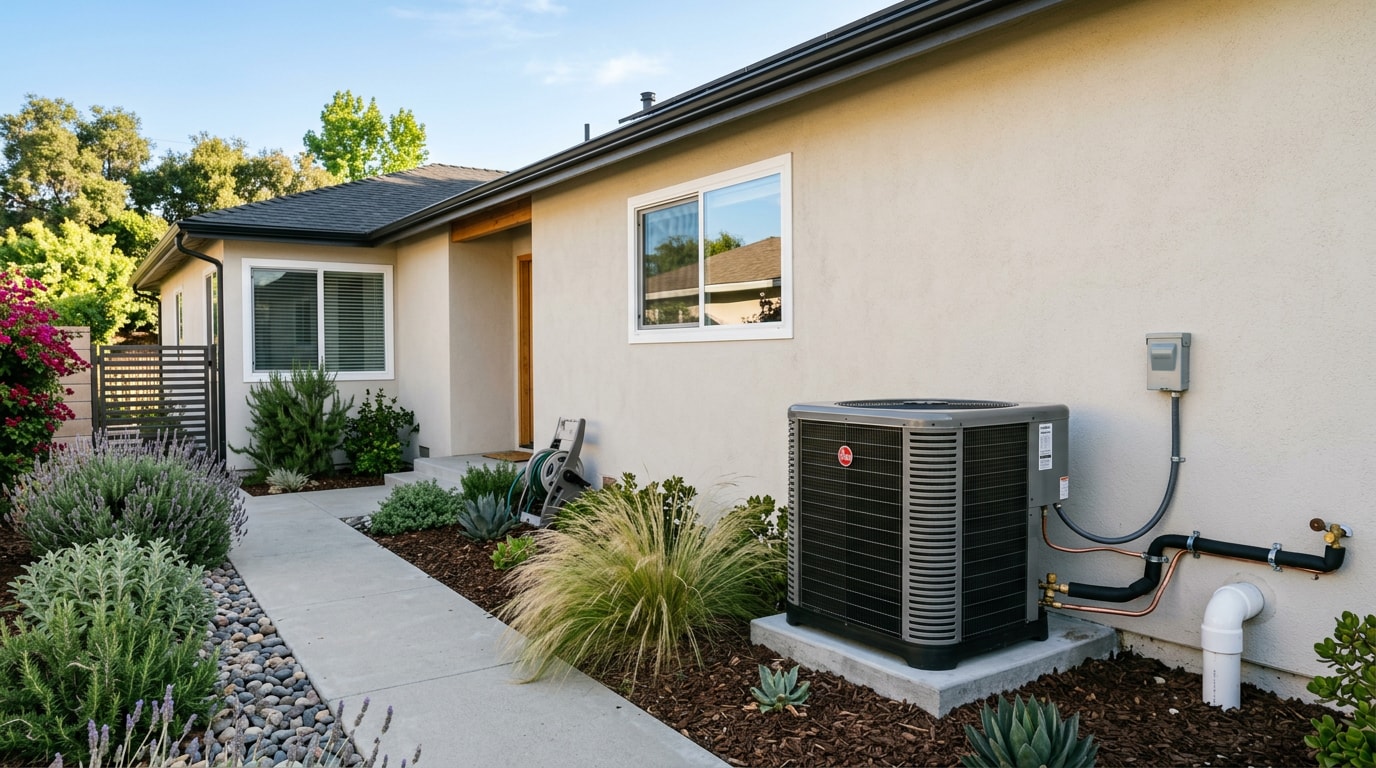
A central air cooling system in Palo Alto, CA has to handle dry, rainless summers where heat builds up fast inside tightly sealed homes. Whether you're replacing a tired unit, cooling a house for the first time, or comparing ductless options for a home without ducts, the decisions you make now affect comfort and bills for the next 15 years. Here's what actually matters before you sign a contract.
Signs Your Central Air Cooling System Needs Replacing
A central AC unit typically needs replacing once it's 10 to 15 years old, struggles to cool rooms evenly, or triggers repair calls more than once a season. Rising energy bills despite normal usage are another reliable replacement signal worth taking seriously.
Average highs run in the upper 70s from June through September, and heat waves push temperatures into the 90s and beyond a few times most years in Palo Alto. An aging system that limped through milder years often can't keep up once one of those heat spikes hits. If your system is running constantly but your home still feels warm, that's usually the moment to compare replacement options rather than schedule another repair. Our air conditioner repair team can tell you honestly whether a fix will hold or whether you're better off putting that money toward AC replacement.
Watch for these specific warning signs:
- Unit is 10+ years old and needs frequent service calls
- Uneven cooling between rooms or floors
- Rising PG&E or CPAU bills with no change in usage
- Grinding, banging, or rattling noises from the outdoor unit
- Warm air blowing from vents even when the thermostat is set low
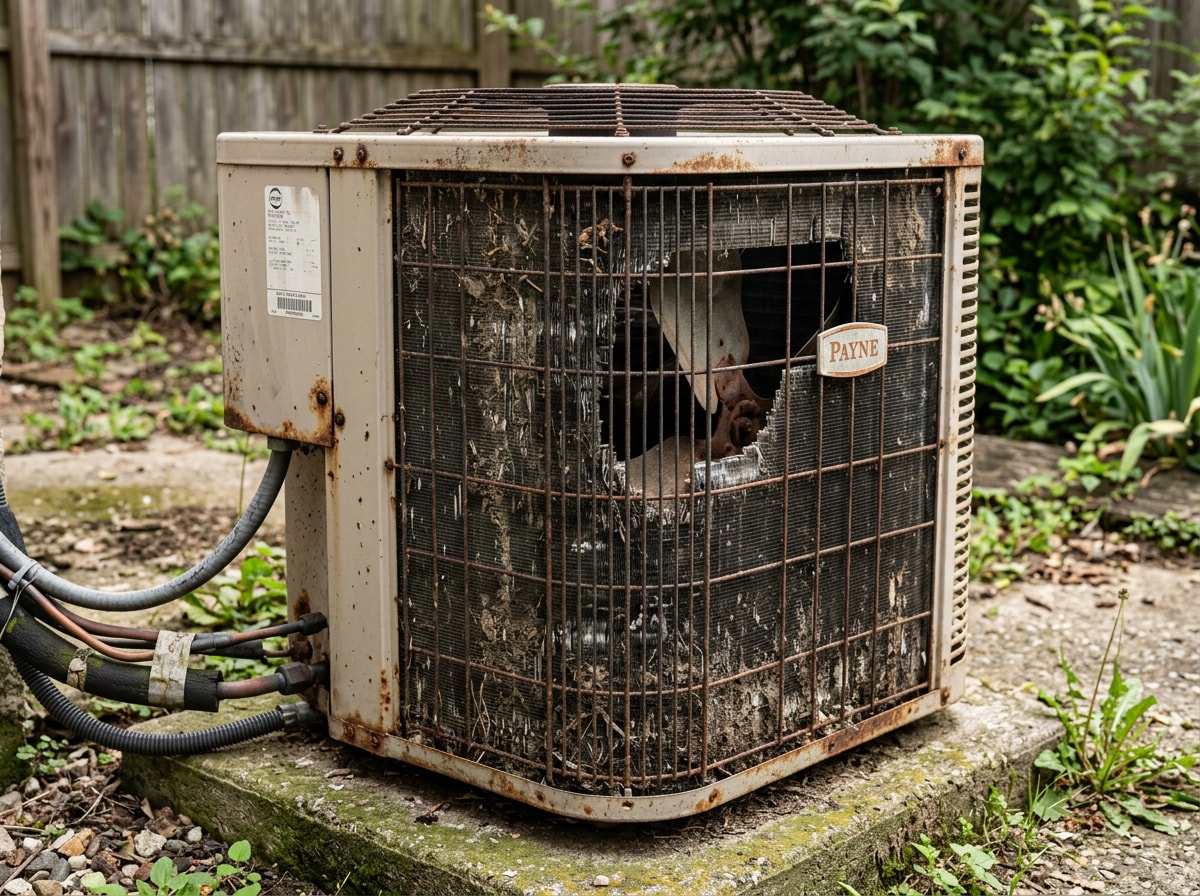
- Visible rust, refrigerant oil stains, or ice on the condenser coil
Central AC vs. Ductless Options for Palo Alto Homes
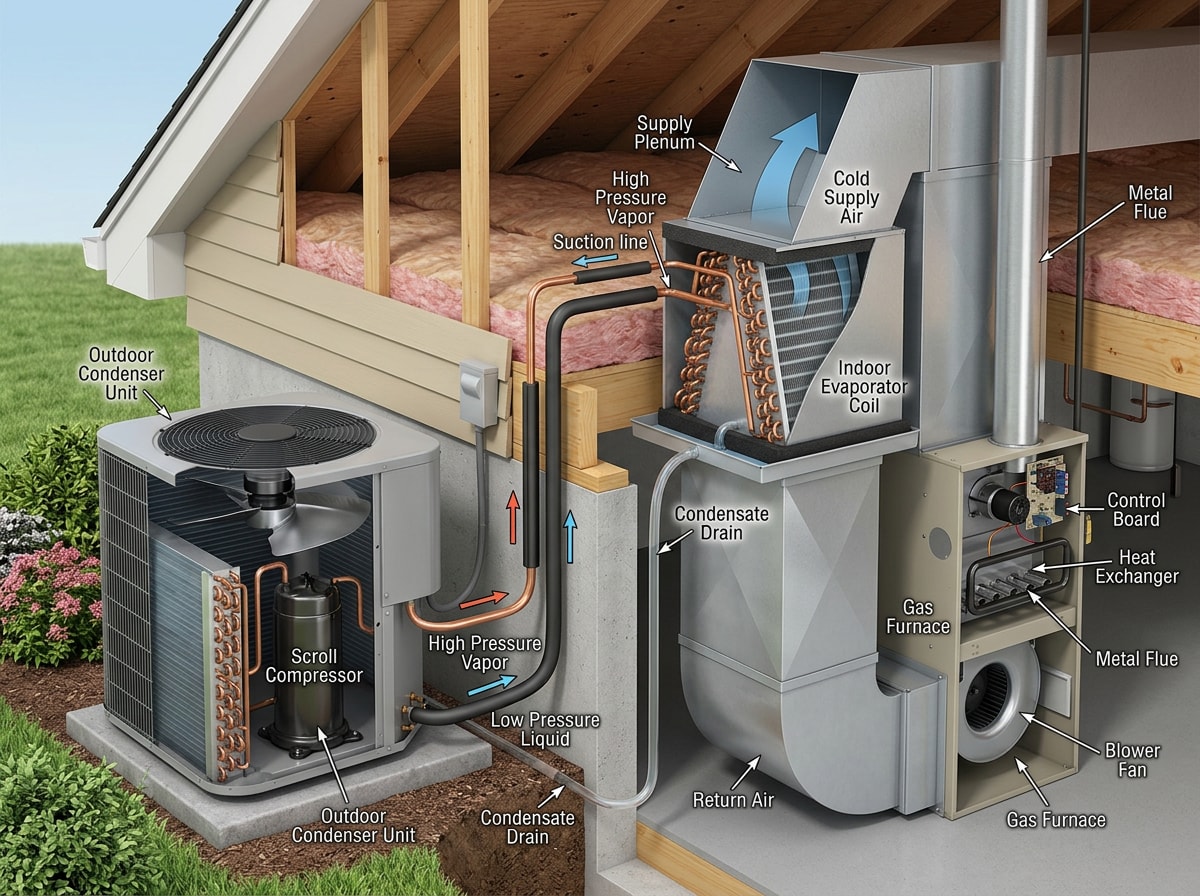
Central air conditioning remains the most practical whole-home cooling choice for Palo Alto houses that already have ductwork. It uses a single outdoor condenser and an indoor coil to push cooled air through existing ducts into every room, which is why it's the default pick for straightforward replacements and first-time cooling installs in homes with forced-air heat.
Not every Palo Alto home qualifies, though. A meaningful share of the city's housing stock, particularly its Eichler-style homes, was built on concrete slabs with radiant floor heating and no attic or crawlspace for ducts. Retrofitting central ductwork into a slab-built home usually means major construction, so these homes are better matched to a ductless mini-split or ducted heat pump system instead. If you're not sure which category your home falls into, a home evaluation settles it quickly. We handle both first-time central AC installs and full replacements of outdated systems; see our central air conditioner installation page or explore heat pump installation if ductwork isn't an option in your home. Homeowners bridging a hot stretch while they decide can also review our guide on AC rental options in Palo Alto for short-term cooling.
Sizing a Central Air Cooling System for Palo Alto's Climate
The right central AC size comes from a load calculation, not square footage alone. It factors in insulation levels, window count and orientation, ceiling height, and local climate data to recommend the correct tonnage. Skipping this step is the single biggest reason new systems underperform.
ACCA's Manual J Residential Load Calculation is the ANSI standard for producing HVAC systems for small indoor environments, and a proper load calculation performed to this procedure is required by national building codes and most state and local jurisdictions. Contractors use it to land on the correct tonnage instead of guessing.
An oversized unit cools a space quickly but shuts off before it removes enough humidity, leaving rooms feeling clammy and shortening equipment life through constant short-cycling. An undersized unit runs nonstop and still can't reach the thermostat setting on hot days. Ductwork condition matters too: leaky or poorly sealed ducts can undercut even a perfectly sized system, which is why our team checks ducts during the same visit and offers duct sealing and duct inspection when needed.
Efficiency targets matter too. Effective January 1, 2025, split system central air conditioners must meet SEER2 ≥ 17.0 and EER2 ≥ 12.0 to qualify for the federal efficiency tax credit , a jump from older thresholds that catches a lot of homeowners comparing quotes in 2026. Getting both sizing and SEER2 rating right from the start avoids costly do-overs down the line.
The Central AC Installation Process in Palo Alto
Every installer describes it a little differently, but a professional installation generally follows the same stages from first visit to final walkthrough.
Home Evaluation and Permitting
Before any equipment arrives, a technician performs a home evaluation to confirm sizing, inspect existing ductwork, and check electrical capacity. This is also when prep happens: clearing access to the attic, the outdoor unit location, and the electrical panel so the crew can work efficiently.
Most central AC projects in Palo Alto require a mechanical permit before installation begins. Mechanical work, electrical work, and plumbing work are among the project types that require a building permit in Palo Alto , and a licensed contractor typically handles this filing on the homeowner's behalf. You can review the city's current process on the City of Palo Alto building permit page. Skipping this step can create problems later when selling the home or filing an insurance claim. Homes in designated historic districts may face additional design review for where the outdoor condenser sits, so flag that early if your property qualifies.
Installation Day: Setup, Testing & Commissioning
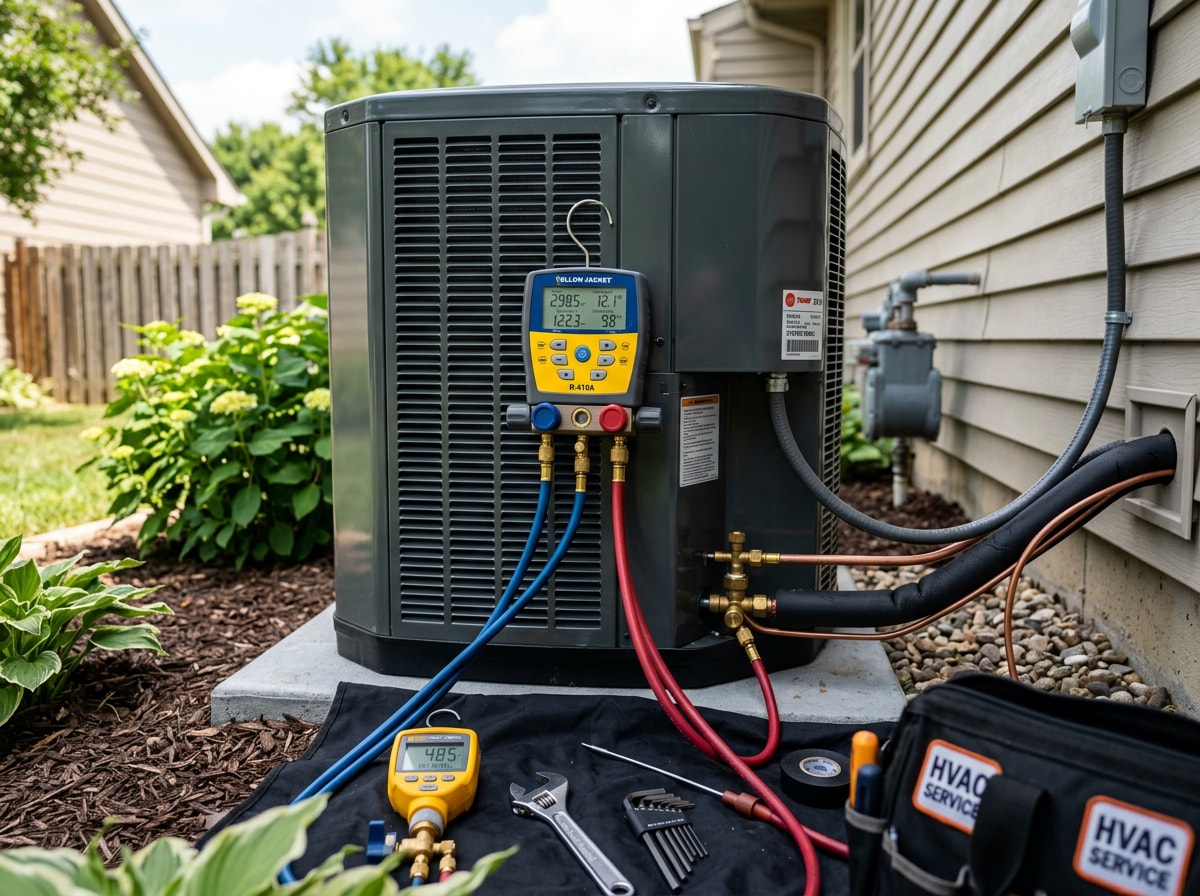
Installation day starts with removing the old unit, if one exists, followed by placing the new condenser and indoor coil, then connecting refrigerant lines and electrical wiring. Once everything is in place, the technician moves into system commissioning: checking airflow, verifying refrigerant charge, and completing thermostat calibration so the system cycles correctly. Our HVAC installation crews handle each of these steps on site rather than subcontracting pieces out.
Most straightforward replacements finish in a single day. Projects requiring ductwork modifications or electrical panel upgrades usually take longer, so it's worth asking upfront whether your home's setup might extend the timeline.
Central Air Cooling System Cost in Palo Alto
Cost depends mainly on system size, SEER2 rating, ductwork condition, and labor complexity. A straightforward replacement, same tonnage, ductwork already in good shape, tends to land toward the lower end of the local range.
| Project scope | What drives the price |
|---|---|
| Like-for-like swap, ducts in good shape | Lower end of the range; fastest timeline |
| New install in a home with existing ducts | Mid-range; may need electrical upgrade |
| Higher SEER2 / variable-speed equipment | Higher upfront cost, lower bills over time |
| Ductwork sealing, resizing, or replacement | Adds meaningfully to total project cost |
| Mini-split or heat pump for a slab-built home | Priced per zone; no ductwork needed |
Projects move toward the higher end when ductwork needs sealing or resizing, electrical upgrades are required, or the homeowner opts for a higher SEER2-rated system for long-term energy savings. That ductwork work is worth assessing during the in-home evaluation rather than after a quote is set. For an accurate number based on your home, request a free estimate.
Maintenance Tips After Installation
Replacing your filter is the simplest way to protect a new system's efficiency and keep warranty coverage intact. The EPA recommends a furnace or HVAC filter rated at least MERV 13 or as high as the system will accommodate, and notes manufacturers typically recommend replacement every 60 to 90 days. You can review the full breakdown on the EPA's Guide to Air Cleaners in the Home.
Keep the outdoor unit clear of leaves, dirt, and overgrown landscaping so airflow isn't restricted. Scheduling an annual tune-up catches small issues, like a slow refrigerant leak or a worn capacitor, before they shorten the system's lifespan. Our air conditioner maintenance plans cover these inspections on a regular schedule, and if indoor air quality is a concern alongside cooling, our indoor air quality services pair well with a new install.
If your home relies on ducts rather than a ductless system, a duct system replacement or ductwork installation may be worth bundling with your AC project if the ducts are original to the house. Visit our homepage to see the full range of heating and cooling services we offer across Santa Clara County, or check our Palo Alto service area page for local details.
FAQ
How long does central AC installation take in Palo Alto?
Most straightforward replacements take about one day from removal to commissioning. The timeline extends if ductwork needs modification or the electrical panel requires an upgrade.
How much does it cost to install a new central air cooling system in Palo Alto?
Cost varies based on system size, SEER2 rating, and ductwork condition. A home evaluation is the most accurate way to get a firm number, since the biggest swing factors (duct condition, electrical capacity) aren't visible from a phone quote.
Do I need a permit for central AC installation in Palo Alto?
Yes. Mechanical work requires a permit through the city, and a licensed contractor typically pulls it as part of the installation so homeowners rarely have to handle the paperwork directly.
Can I install central air in a home without existing ductwork?
Sometimes, but it depends on the home's structure. Homes with attic or crawlspace access can often take new ducts. Slab-built homes without attic space, common in Palo Alto's Eichler neighborhoods, are usually better suited to a ductless mini-split or ducted heat pump instead of retrofitted ductwork.
How often should central AC maintenance be scheduled?
Most manufacturers and technicians recommend a professional tune-up once or twice a year, paired with a routine filter-change schedule for consistent performance.