A heat pump furnace in Sunnyvale, CA now comes with a new wrinkle: a city rule that nudges AC replacements toward heat pumps starting at the end of 2026. Add in shifting rebates and a federal tax credit that just disappeared, and pricing a system today looks different than it did even a year ago. Here's what actually applies to your house, what it costs, and how to avoid surprises on install day.
Sunnyvale's 2026 Heat Pump Rule: What Changes for Your AC and Furnace
In August 2025, Sunnyvale's City Council adopted a reach code for existing single-family homes, and the city's reach codes go beyond California's State Building Code requirements and were approved for existing single-family home alterations, with enforcement beginning at the end of 2026 .
The ordinance doesn't ban gas furnaces outright. It targets the cooling side of the system. According to the state filing that approved it, Sunnyvale's rule introduces a mechanical cooling system requirement for altered space conditioning systems in existing single-family homes, which encourages installation of air source heat pumps while still allowing air conditioners with additional efficiency measures .
In plain terms: when you replace your AC, you'll need to install a heat pump or add efficiency upgrades to a conventional AC. Your Sunnyvale service area team can walk you through which path fits your home before the deadline hits.
What Counts as a "Replacement" (and What Doesn't)
The rule is triggered by equipment replacement, not by routine service. Here's the practical breakdown:
- Repairing a failed compressor or recharging refrigerant does not trigger the rule.
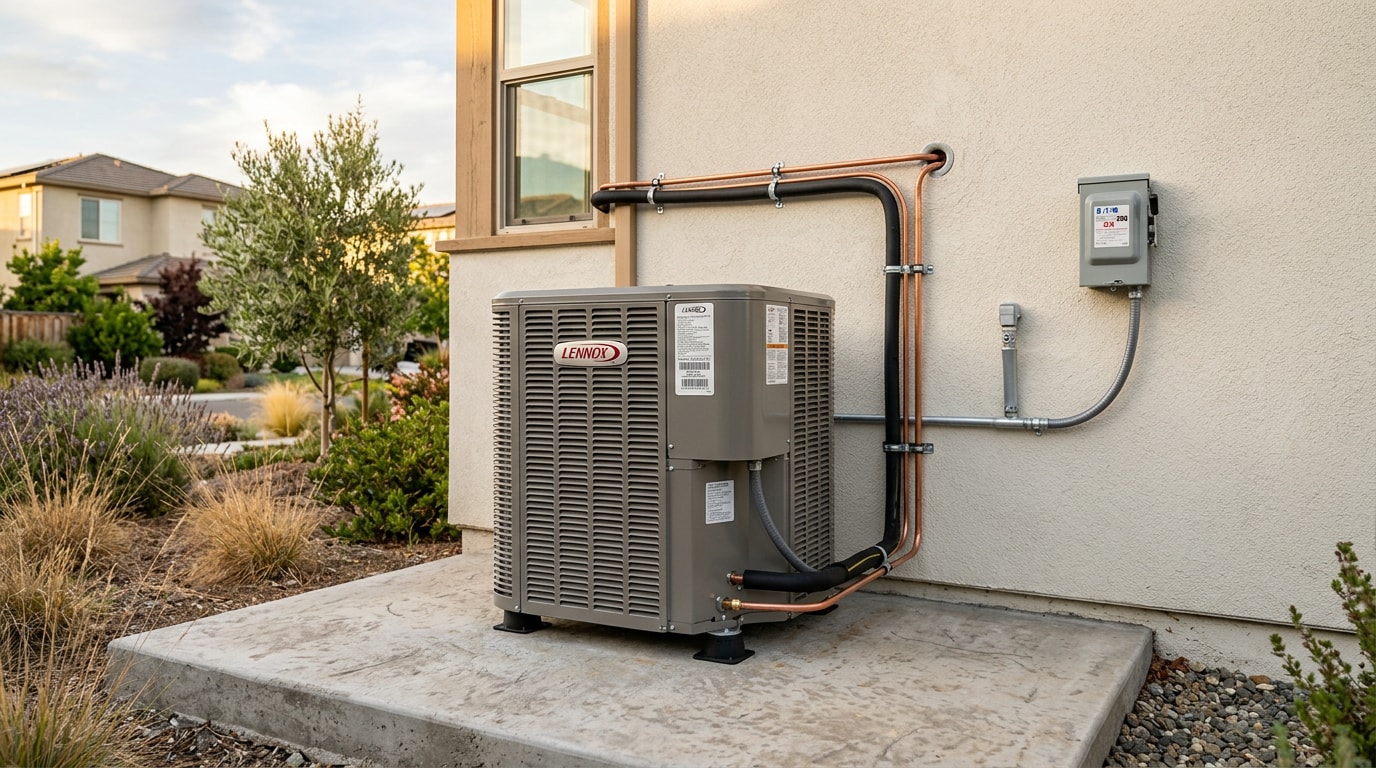
- Removing and replacing the full outdoor condenser does trigger it.
- Furnace-only swaps, where the AC stays in place, sit outside this specific requirement.
That last point matters more than most homeowners realize. A city FAQ on the same model ordinance spells it out directly: the policy relates to AC installation, not furnace installations, when asked whether a heat pump would be required if a furnace breaks . So a furnace-only failure doesn't force you into a heat pump, though plenty of homeowners electrify both at once to avoid a second disruption later. If you're weighing that decision, our heat pump installation page and AC replacement page break down both routes side by side.
Permits and Inspections You'll Need
Every heat pump or furnace swap in Sunnyvale requires a mechanical permit, and the city's One-Stop Permit Center handles plan review and inspection scheduling for these projects. The One-Stop Permit Center at City Hall offers streamlined review of development projects and building plans , with Building, Fire, Planning, and Public Works Engineering all involved depending on scope.
A licensed contractor should pull this permit for you and coordinate the inspection as part of the job. If you're not sure whether your planned work needs plan review or a simpler over-the-counter permit, our HVAC installation team can check before you commit to a quote. Get a free estimate and we'll confirm the permit path with the city on your behalf.
What a Heat Pump Furnace Costs in Sunnyvale
A ducted heat pump furnace replacement in Sunnyvale typically runs $9,000 to $18,000 installed before rebates, with final pricing shaped by home size, existing duct condition, and the tonnage required. These are ballpark industry ranges, not a quote; an in-home assessment is the only way to get a firm number.
| Scope | Before Rebates | After Typical Rebates |
|---|---|---|
| Standard ducted heat pump (ducts in good shape) | $9,000–$12,500 | $7,000–$10,500 |
| Ducted system + moderate duct repair | $12,000–$15,500 | $9,500–$13,000 |
| Larger home or panel upgrade needed | $15,000–$18,000 | $12,500–$16,000 |
Efficiency ratings also move the price. SEER2 is the total heat removed from the conditioned space during the annual cooling season, divided by the total electrical energy consumed by the heat pump during the same season , and higher-rated equipment generally costs more upfront in exchange for lower monthly bills. The ENERGY STAR key product criteria page lists the current efficiency thresholds if you want to compare models before you buy.
Rebates, Financing, and the End of the Federal Tax Credit
Silicon Valley Clean Energy (SVCE) still pays real money toward a heat pump that replaces a gas furnace. Per SVCE's current rebate schedule, a Heat Pump Heating, Ventilation, and Air Conditioning (HP HVAC) system replacing a gas furnace qualifies for a $2,000 rebate, rising to $3,000 for income-qualified households . Homes needing panel work can add to that: SVCE also lists an Electrical Panel Rebate of up to $2,000 for qualifying upgrades. Full program rules and current amounts are posted on SVCE's home rebates page.
Here's the part most 2025-era guides still get wrong: the federal 25C tax credit is gone. The IRS confirms that the credit will not be allowed for any property placed in service after December 31, 2025 . If you're pricing a system in 2026, don't expect a federal credit to offset the cost. Budget around the local SVCE rebate and any financing your contractor offers instead.
Financing options like on-bill repayment and contractor-arranged payment plans can still spread the cost over time. If you want a rebate check done before you sign anything, contact our team and we'll confirm what you actually qualify for.
Which Heat Pump System Fits Your Sunnyvale Home
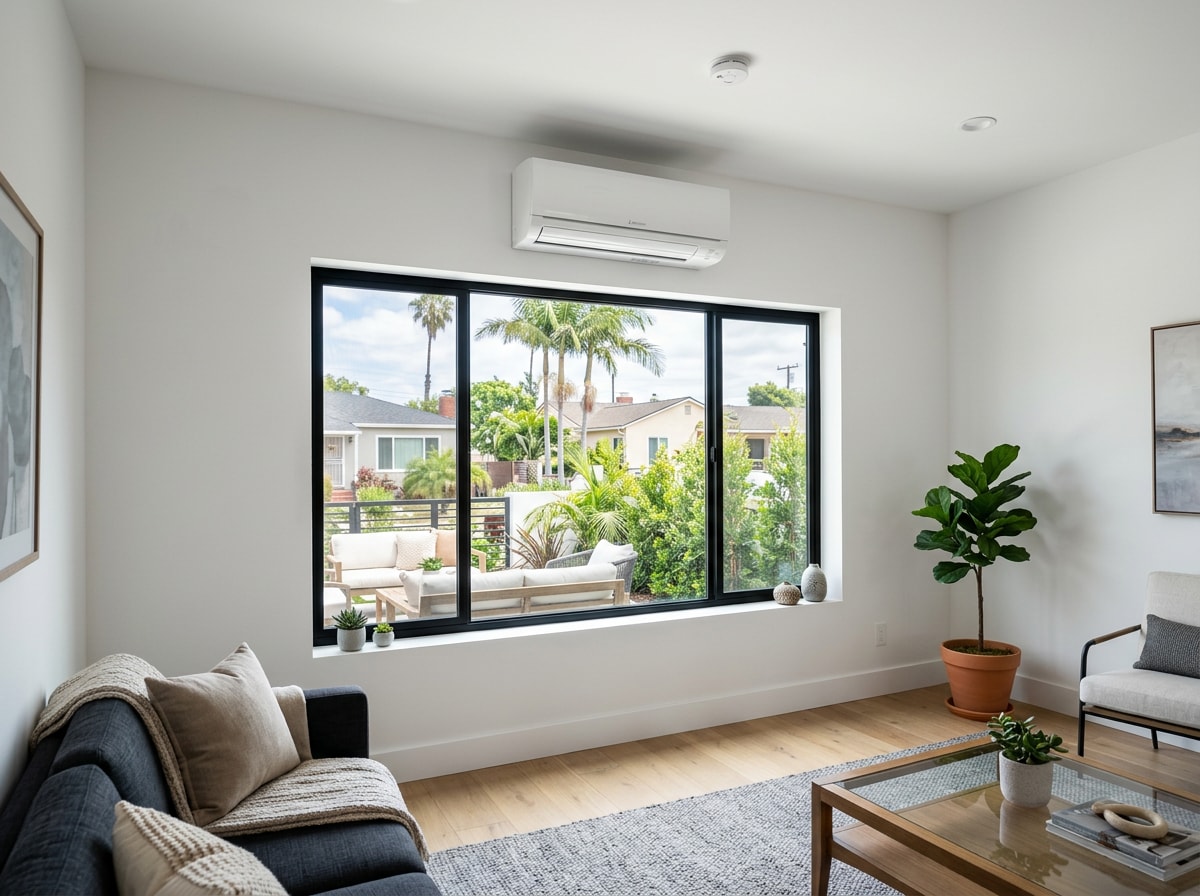
Most Sunnyvale homes fall into one of two categories: a ducted air-source heat pump that reuses existing ductwork, or a ductless mini-split that skips ducts entirely. Because Sunnyvale winters rarely dip near freezing, a properly sized ducted heat pump typically handles both heating and cooling without backup strip heat.
The right pick depends on a few home-specific factors:
- Whether your existing ducts are sealed and correctly sized
- Whether you want room-by-room zoning
- Whether your electrical panel has capacity for the new equipment
That last factor trips people up more than it should. Sunnyvale's own electrification guidance notes that homes with smaller 100-amp panels can often switch to heat pumps without a panel upgrade, since most homes can run all-electric power on a 100-amp panel . In our service calls across Sunnyvale's older ranch-style neighborhoods, that's held true more often than homeowners expect, so don't assume a costly panel swap is automatic.
If your ducts are the bigger question mark, a duct inspection before you buy equipment can save you from undersizing or oversizing the system. For homes without ductwork at all, our ductless heating and cooling guide for Mountain View covers how mini-splits perform in similar South Bay homes.
Installation Day: What Actually Happens
A typical install follows a predictable sequence:
- Home assessment and load calculation — a technician measures square footage, insulation, and duct layout to size the system correctly.
- Electrical work — connecting the new equipment, including a panel upgrade if one is actually needed.
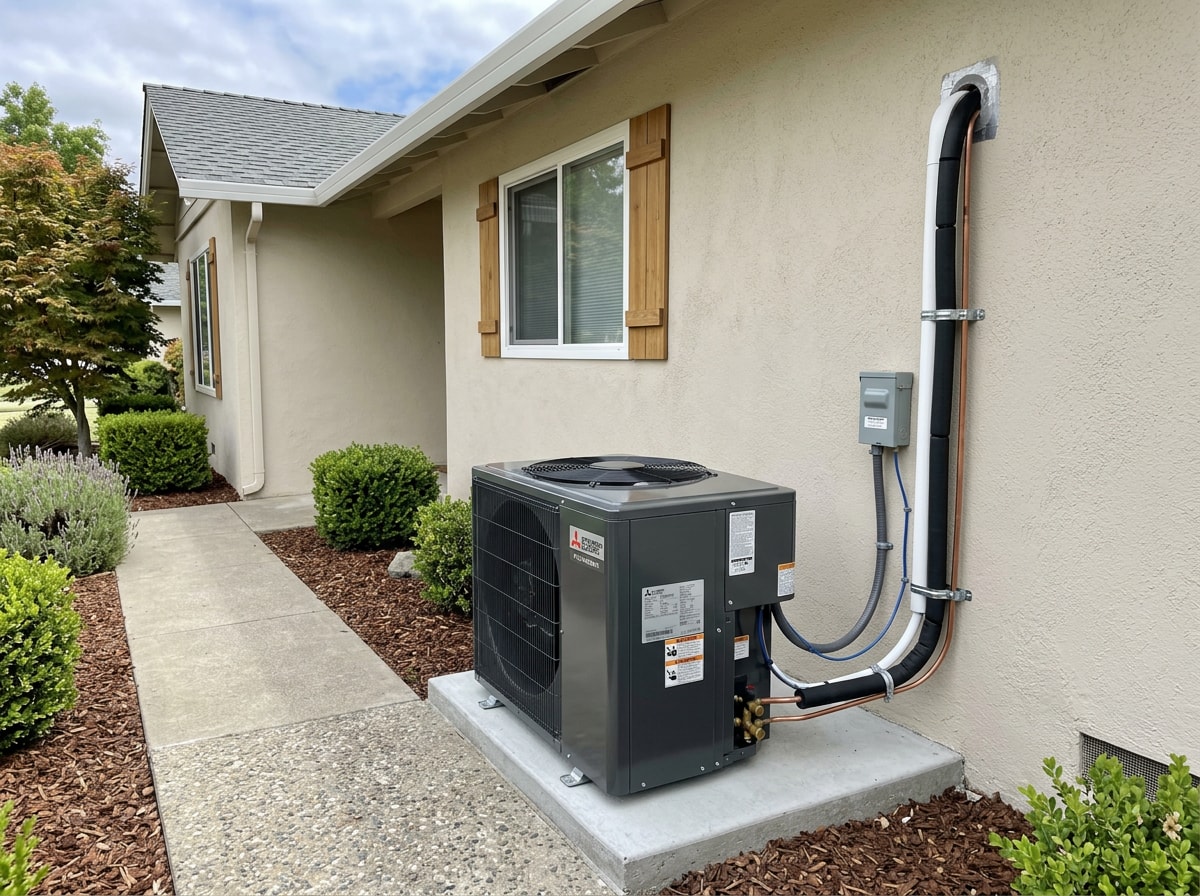
- Outdoor unit placement — positioned according to clearance and noise considerations.
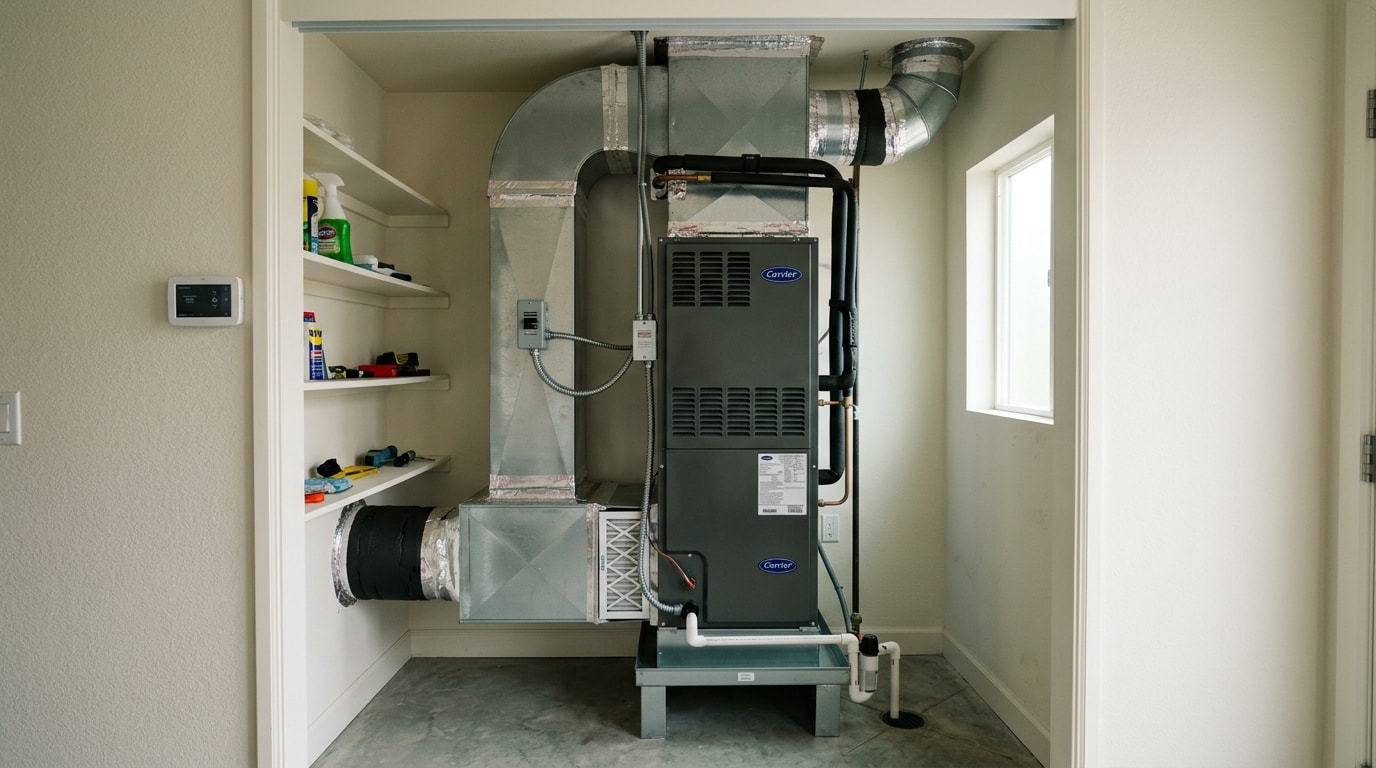
- Indoor coil or air handler work — plus refrigerant line connections.
- Startup testing — confirming airflow, refrigerant charge, and thermostat operation before the crew leaves.
For a straightforward furnace-and-AC swap, most Sunnyvale installations run one to two days. Homes needing electrical upgrades or new ductwork can take longer. A good HVAC installation crew should walk you through each stage before work starts, so nothing on this list is a surprise.
Repair or Replace? Signs It's Time for a New System
As a general guide, systems older than 10 to 15 years, or facing repair costs approaching 40–50% of replacement cost, are usually better candidates for replacement. Frequent breakdowns, uneven heating, and climbing utility bills are additional signs the equipment has caught up with its age, even if it hasn't fully failed.
That threshold isn't fixed for every household. A well-maintained unit might run efficiently past the ten-year mark, and a newer system with a single component failure is often worth repairing. If you're on the fence, our furnace repair and furnace replacement teams can give you a real cost comparison instead of a guess. Routine HVAC maintenance also extends the life of whichever system you choose, which matters more now that the reach code deadline is approaching.
FAQ
How much does a heat pump furnace cost in Sunnyvale?
A typical ducted heat pump furnace in Sunnyvale runs roughly $9,000 to $18,000 installed before rebates. After SVCE incentives, many homeowners land closer to $7,000 to $16,000, depending on home size and duct condition.
Do I need a permit for a heat pump install in Sunnyvale?
Yes. Heat pump and furnace replacements require a mechanical permit through the city's One-Stop Permit Center, and a licensed contractor should pull it and schedule the inspection for you.
Are heat pump rebates still available in Sunnyvale in 2026?
Yes. SVCE currently pays $2,000 toward a heat pump replacing a gas furnace, rising to $3,000 for income-qualified households, plus up to $2,000 for a qualifying electrical panel upgrade.
Will I need an electrical panel upgrade?
Not always. The city's own guidance says most homes with a 100-amp panel can switch to a heat pump without upgrading it. A load calculation during your estimate confirms whether your specific panel has enough capacity.
Will a heat pump be required when my furnace breaks?
No. Sunnyvale's reach code is triggered by AC replacement, not furnace failure. A furnace-only swap currently sits outside this rule.
Is a heat pump better than a gas furnace in Sunnyvale's climate?
In a mild climate like Sunnyvale's, a heat pump can efficiently handle both heating and cooling with one system. A gas furnace may still make sense for homes with high electrical-upgrade costs or minimal cooling needs.
Is there still a federal tax credit for heat pumps in 2026?
No. The federal 25C Energy Efficient Home Improvement Credit ended for any equipment placed in service after December 31, 2025. Rebates from SVCE are now the main local incentive available.
About This Guide
This guide was put together by the team at Made Simple Heating & Air, licensed HVAC contractors who install and service heat pumps and furnaces throughout Sunnyvale and the South Bay. Reach code rules and rebate amounts change as the city and SVCE update their programs, so if anything here looks out of date by the time you read it, reach out for a free estimate and we'll confirm the current numbers before you commit to a system.