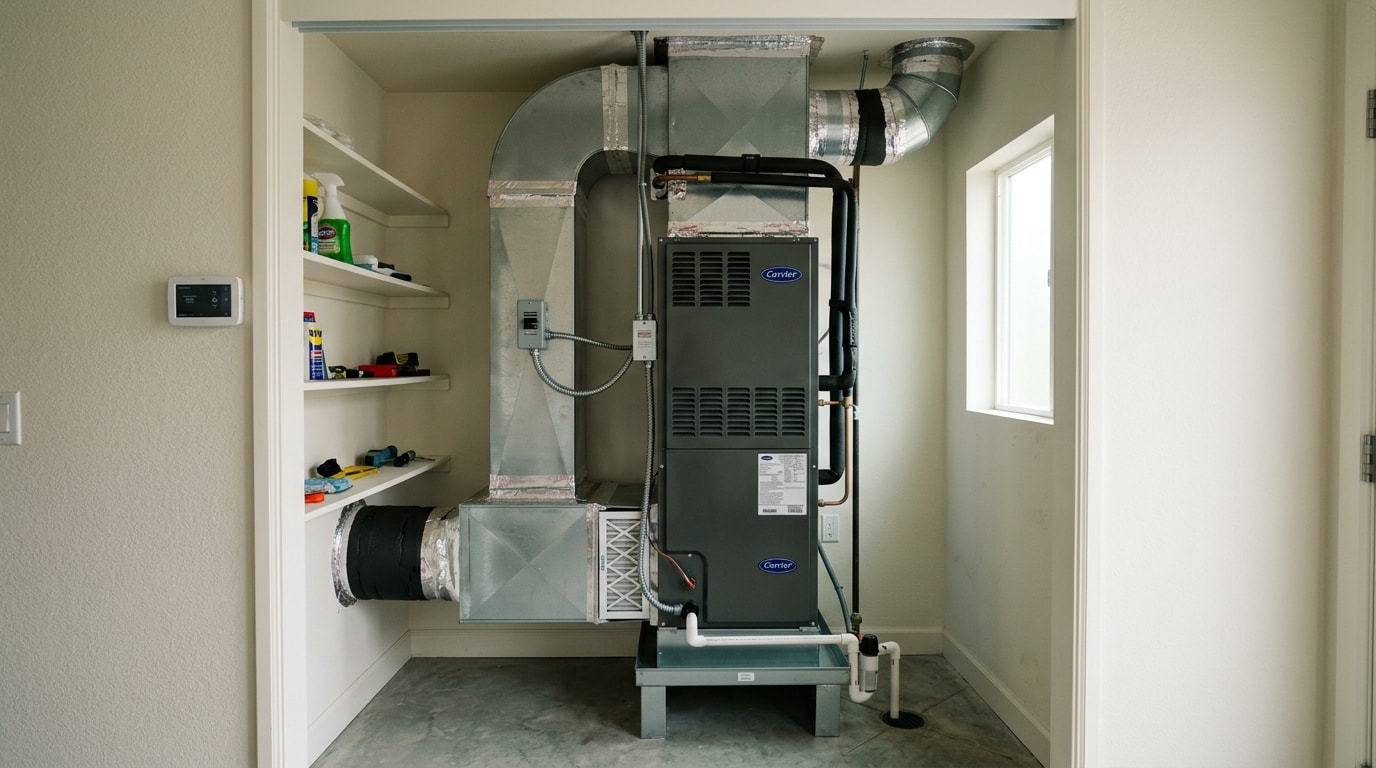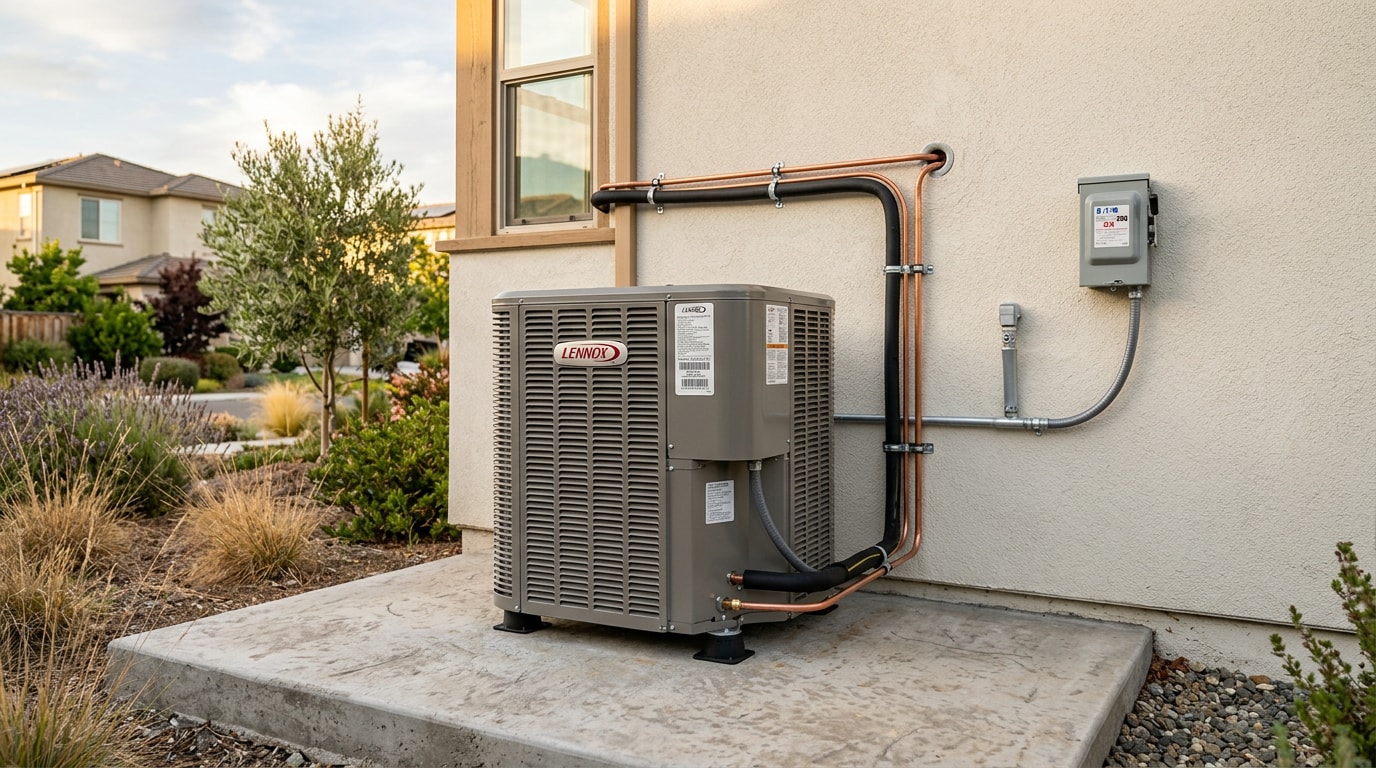
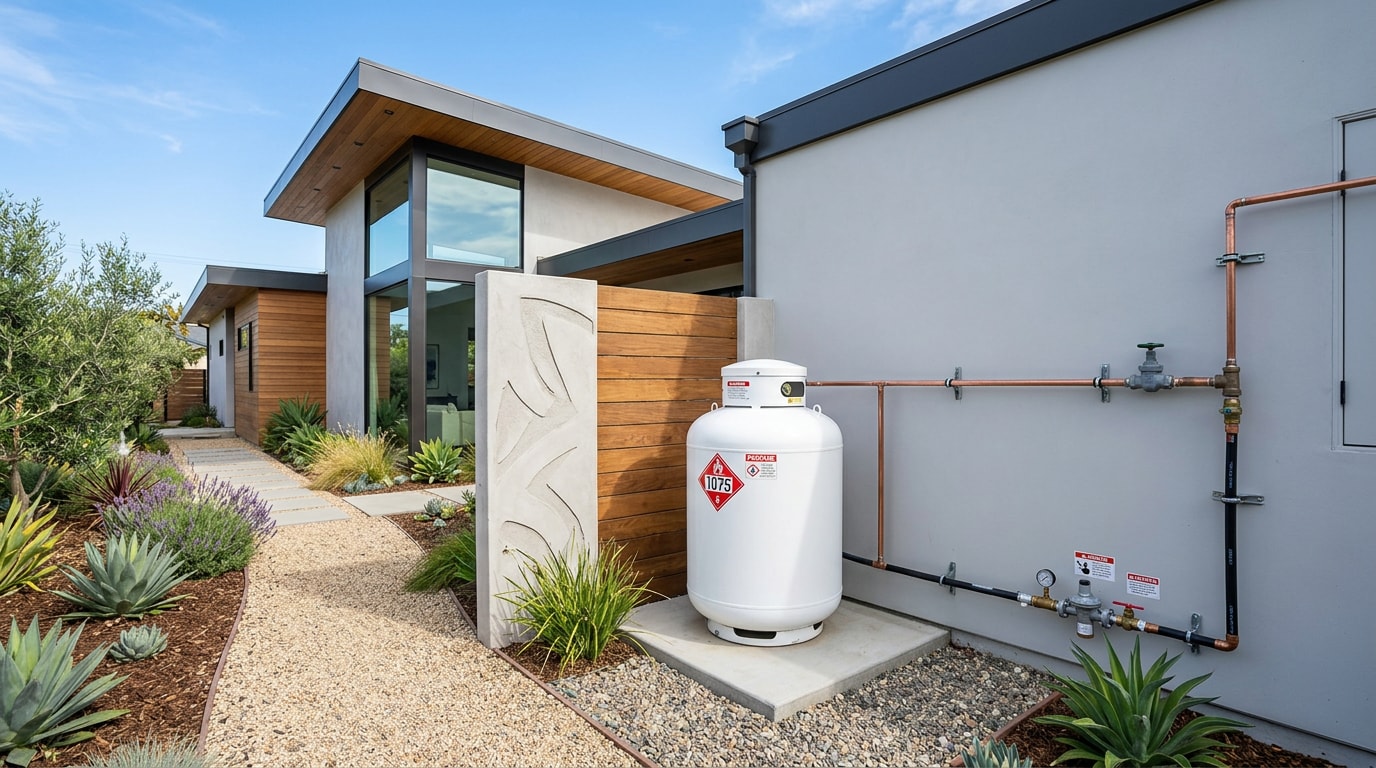
A propane heating system in Cupertino, CA is usually the answer when a property sits beyond the natural gas main, especially on older hillside lots above Stevens Creek Boulevard where the gas line simply never got extended. This guide breaks down 2026 installation costs, the permit steps Santa Clara County requires, tank placement rules, and how propane stacks up against the heat pumps most new Cupertino builds use instead.
Is Propane Right for Your Cupertino Home?
Propane makes the most sense when natural gas isn't available at your address. Not every Cupertino street has a gas main, so the first move is checking with your utility provider or a local installer before assuming either fuel is off the table.
Propane also carries less energy per gallon than gasoline, which matters more than most homeowners realize. A gallon of propane has about 73% of the energy in a gasoline-gallon equivalent due to the lower energy density of propane. That's exactly why furnace sizing calculations matter so much for propane systems. An undersized unit struggles on cold mornings; an oversized one short-cycles and wastes fuel.
For homes without a nearby gas main, propane becomes the practical default over trenching hundreds of feet of new gas pipe through a hillside lot. Our Cupertino service area page covers neighborhoods where we see this most often.
Here's a detail most cost guides skip: Cupertino's local green-building ordinance now touches homes that install gas or propane equipment. New construction using gas or propane heating systems must indicate electrical infrastructure and physical space accommodating a future switch to electric equipment. In plain terms, even if you install propane today, your plans may need to show how the home could go electric later. Ask your contractor whether your project falls under this requirement before you finalize equipment choices.
2026 Propane Heating System Costs in Cupertino, CA
Propane heating involves two separate cost conversations: what it costs to install, and what it costs to run month to month. Both numbers run higher in the Bay Area than the national averages quoted in most online calculators, because labor and permitting costs here are elevated across the board.
Installation and Tank Costs
Pricing varies by source, but the ranges are consistent enough to budget against:
A standard-efficiency propane furnace installation costs $2,200 to $5,700 on average.
Nationally, propane furnace installation runs $3,000 to $8,000, with an average around $4,800, factoring in higher-efficiency units and complex installs.
Labor alone for installing a propane furnace typically falls between $1,000 and $3,100.
You'll also need a propane tank on your property, and tank installation costs $600 to $2,500 depending on whether you choose above-ground or below-ground placement.
| Line Item | Typical Cost Range |
|---|---|
| Propane furnace (standard efficiency, installed) | $2,200 – $5,700 |
| Propane furnace (national average, all efficiency tiers) | $3,000 – $8,000 |
| Installation labor only | $1,000 – $3,100 |
| Propane tank installation | $600 – $2,500 |
| Natural-gas-to-propane conversion (tank rental) | $275 – $800 |
| Natural-gas-to-propane conversion (tank purchase) | $1,900 – $4,900 |
Ductwork repairs or zoning upgrades add to the total, so insist on an itemized quote rather than a single bundled number.
Converting From Another Fuel
Switching from natural gas, oil, or electric resistance heat to propane involves different math depending on your starting point. Converting to a propane furnace typically ranges from $275 to $13,300, with natural-gas-to-propane conversions running $275 to $800 if you rent the tank, or $1,900 to $4,900 if you purchase it outright. Electric-to-propane conversions usually land higher because they require new gas lines and venting that electric resistance systems never needed.
On the operating-cost side, winter 2026-2027 is actually shaping up in propane's favor. Homes heating with electricity are expected to see about a 4% increase in bills this winter, while homes heating with propane are projected to see expenditures drop roughly 3% on average. That's a meaningful data point if you're weighing a propane conversion against sticking with electric baseboard or resistance heat.
Propane Furnace Installation Process in Cupertino
A licensed contractor doesn't just show up and drop in a furnace. The process typically moves through four stages, and knowing them ahead of time makes it easier to spot a contractor who's cutting corners.
- Site assessment and load calculation. A full walkthrough covers layout, insulation, existing ductwork, and where the tank can realistically go. A proper load calculation determines heating capacity based on your actual home, not a square-footage guess.
- Permitting. Santa Clara County and the City of Cupertino require permits for both the furnace swap and the propane tank installation. Skipping this step is one of the most common reasons propane installs run into problems later.
- Installation. This includes positioning the furnace, running gas lines from the tank, connecting venting, and testing the whole system under load.
- Final inspection. A qualified installer should request inspection before calling the job complete; if a contractor suggests skipping it, treat that as a red flag.
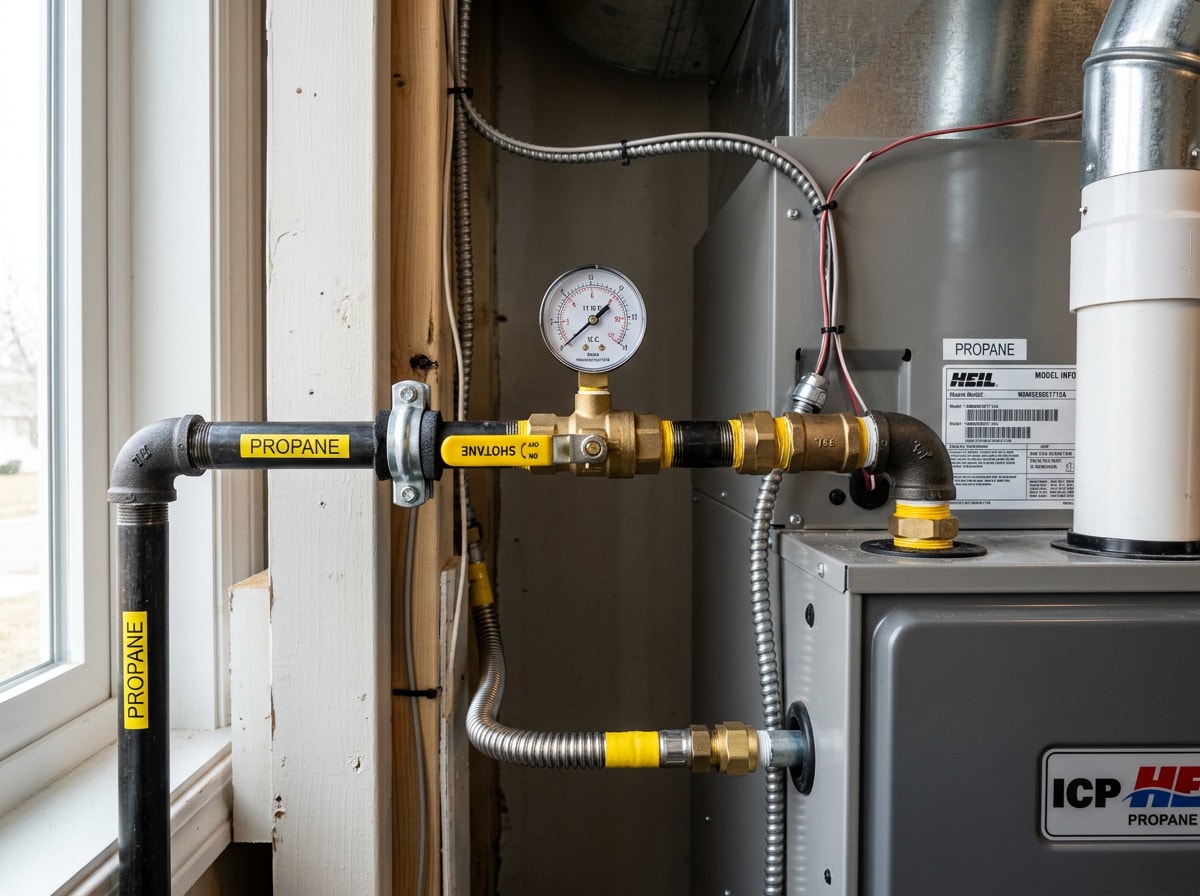
Most straightforward installs take one to two days, though tank placement, permits, and inspection scheduling can stretch the timeline by a week or more. Sizing errors and improper installation are leading causes of inefficiency, so work with an installer with documented propane experience. Our furnace installation team handles exactly this kind of project across the South Bay, including the permit coordination.
Propane Tank Placement and Safety Setbacks
This is the part generic cost calculators tend to skip, and it's where Cupertino's smaller hillside lots can create real headaches. Propane tank placement is governed by NFPA 58, the national Liquefied Petroleum Gas Code, which sets minimum setback distances based on tank size.
Under NFPA 58, tanks between 125 and 500 gallons require a minimum setback of 10 feet from buildings, property lines, and ignition sources. That 10-foot clearance has to account for windows, doors, air intakes, and anything that sparks, including an AC condenser. On a narrow Cupertino lot, that single requirement can dictate whether an above-ground tank fits at all, or whether you need an underground tank instead.
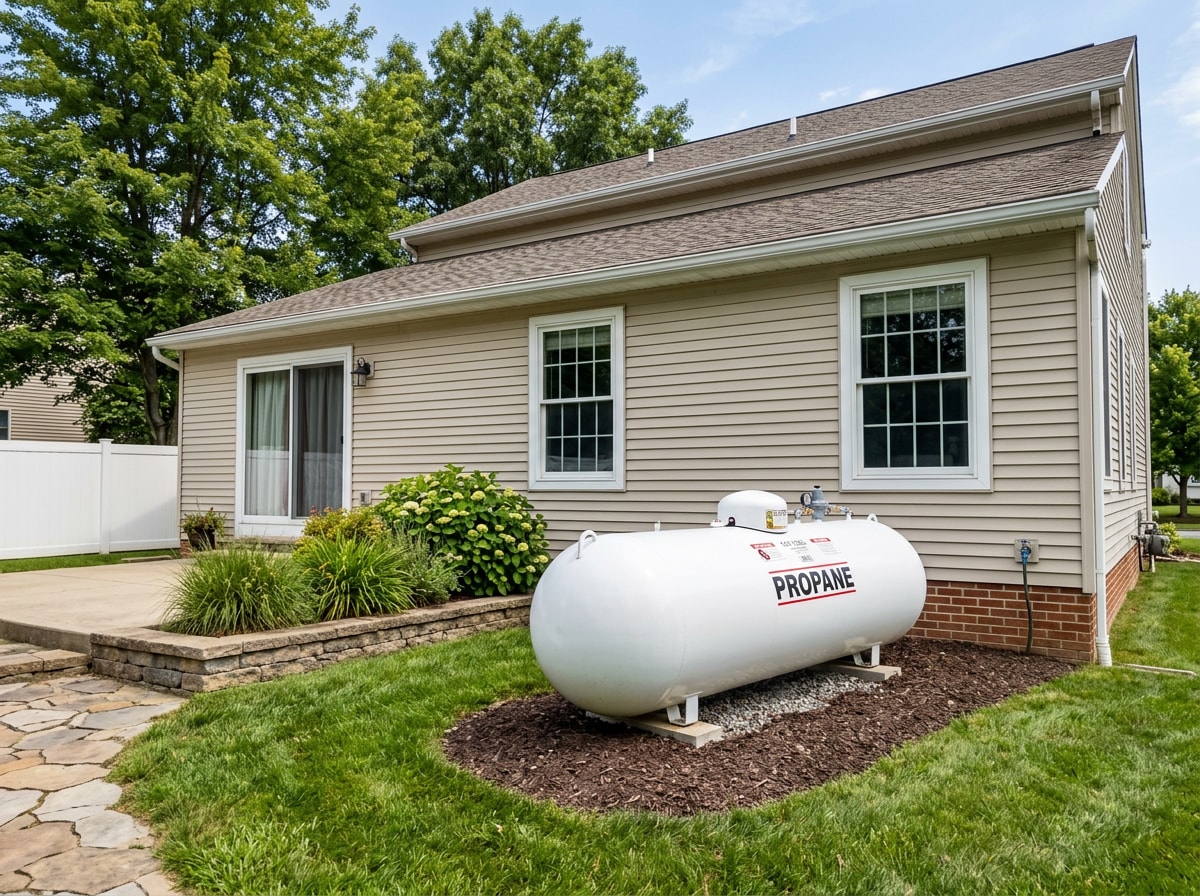
Before signing a quote, ask your installer to walk the property with you and mark where the tank will actually sit relative to the setback lines. It's a five-minute conversation that prevents a very expensive relocation later.
Propane vs. Natural Gas vs. Heat Pump
Cupertino's mild climate gives homeowners three realistic paths: natural gas furnaces, heat pumps, or propane. Heat pumps work well here because winters rarely dip far below freezing, which is why many newer builds skip combustion heat entirely. Our heat pump installation page covers that option in more detail if your home already has gas or isn't locked into propane.
Propane earns its place for a specific set of homes:
- No natural gas line reaches the property
- The household wants heat that keeps working during a power outage
- An ADU or detached structure sits far from existing utility lines
- The home already runs other propane appliances (water heater, range, fireplace)
If none of those describe your situation, a heat pump or natural gas furnace is probably the simpler, cheaper path. If one or more does, propane is worth a real quote.
Pros and Cons of Propane Home Heating
Advantages:
- A single tank can fuel your furnace, water heater, range, and a backup generator, consolidating multiple appliances into one delivery schedule
- Delivery continues during broader grid disruptions, unlike electric heat
- Furnaces burn hotter per unit of fuel than electric resistance systems, so less fuel produces more usable warmth
- No dependency on a utility gas main reaching your street
Tradeoffs:
- Requires a tank, which takes up yard space and needs the NFPA 58 setback clearance covered above
- Upfront installation and conversion costs run higher than simply connecting to an existing gas line
- Fuel deliveries need scheduling, and running out mid-winter means an emergency call
- Tank rental agreements can lock you into a single supplier
Maximizing Propane Furnace Efficiency and Lifespan
Furnace efficiency after installation comes down to three things: sealed ductwork, routine maintenance, and smart thermostat use. Leaky ducts waste conditioned air before it reaches the rooms you're heating, so sealing and insulating ducts is one of the cheapest ways to improve real-world performance.
Annual tune-ups catch small issues, like a dirty burner or worn igniter, before they shorten furnace lifespan or cause a mid-winter breakdown. A well-maintained propane furnace typically lasts 15 to 20 years. If yours is due for a checkup, our furnace maintenance service and furnace inspection visits both catch wear issues early. For a deeper look at seasonal upkeep across the region, our guide to heating system maintenance in Los Gatos walks through the same checklist we use on propane and gas systems alike.
AFUE (Annual Fuel Utilization Efficiency) is the standard measure of how much fuel converts to usable heat. Current ENERGY STAR certified gas furnaces require an AFUE of 97% or higher to qualify for federal tax credits. Most standard propane furnaces on the market run lower than that, so it's worth asking your installer to show you the AFUE rating on the specific model in your quote, not just the brand name. If your existing furnace is acting up before you've decided on a replacement, our furnace repair team can diagnose it and tell you honestly whether a repair or a full swap makes more sense.
In our visits across Cupertino's older hillside neighborhoods, we regularly find homes from the 1960s and 70s where the gas main stops at the street below and was never extended uphill. Propane fills that gap without the cost of trenching new gas line hundreds of feet up a slope.
Ready to find out what a propane system would actually cost at your address? Get a free estimate and we'll walk the property with you before you commit to anything.
About This Guide
This guide was put together by the installation team at Made Simple Heating & Air, a licensed HVAC contractor serving Cupertino, Sunnyvale, Santa Clara, and the surrounding South Bay. Our crews handle propane furnace installs, conversions, and repairs across Santa Clara County and coordinate permits directly with the city. Questions about your specific property? Contact us for a free, no-pressure estimate.
FAQ
How much does it cost to install a propane heating system in Cupertino, CA?
Budget $2,200 to $5,700 for a standard-efficiency furnace installation, or up to $8,000 for a high-efficiency unit with a complex install. Add $600 to $2,500 for the propane tank itself, plus gas line and permit costs that vary by property.
How long does a 500-gallon propane tank last for a house?
A 500-gallon propane tank typically lasts one to three months during winter heating season, depending on home size, insulation quality, and furnace efficiency. Smaller, well-insulated homes stretch that further; larger or older homes need more frequent deliveries.
What is the lifespan of a propane furnace?
A well-maintained propane furnace typically lasts 15 to 20 years. Annual servicing, correct sizing at installation, and sealed ductwork all help a unit reach the higher end of that range.
How often should a propane furnace be serviced?
Once a year, ideally before heating season starts. Annual maintenance catches wear issues early and keeps efficiency and lifespan on track.
Is propane heat cheaper than electric heat?
For this winter specifically, yes. Homes heating with electricity are projected to see bills rise about 4%, while propane-heated homes are projected to see expenditures drop roughly 3% on average, according to federal energy forecasts. Actual savings still depend on local propane pricing and your furnace's efficiency.
Do I need a permit for a propane tank in Cupertino, CA?
Yes. Both the furnace installation and the propane tank placement typically require permits through the City of Cupertino and Santa Clara County, along with a final inspection. A licensed installer handles this coordination as part of the project.
Is propane heating safe for homes?
Yes, when installed and maintained to code. Propane systems follow NFPA 58 setback and installation standards, and annual inspections catch leaks, worn components, or venting issues before they become hazards.