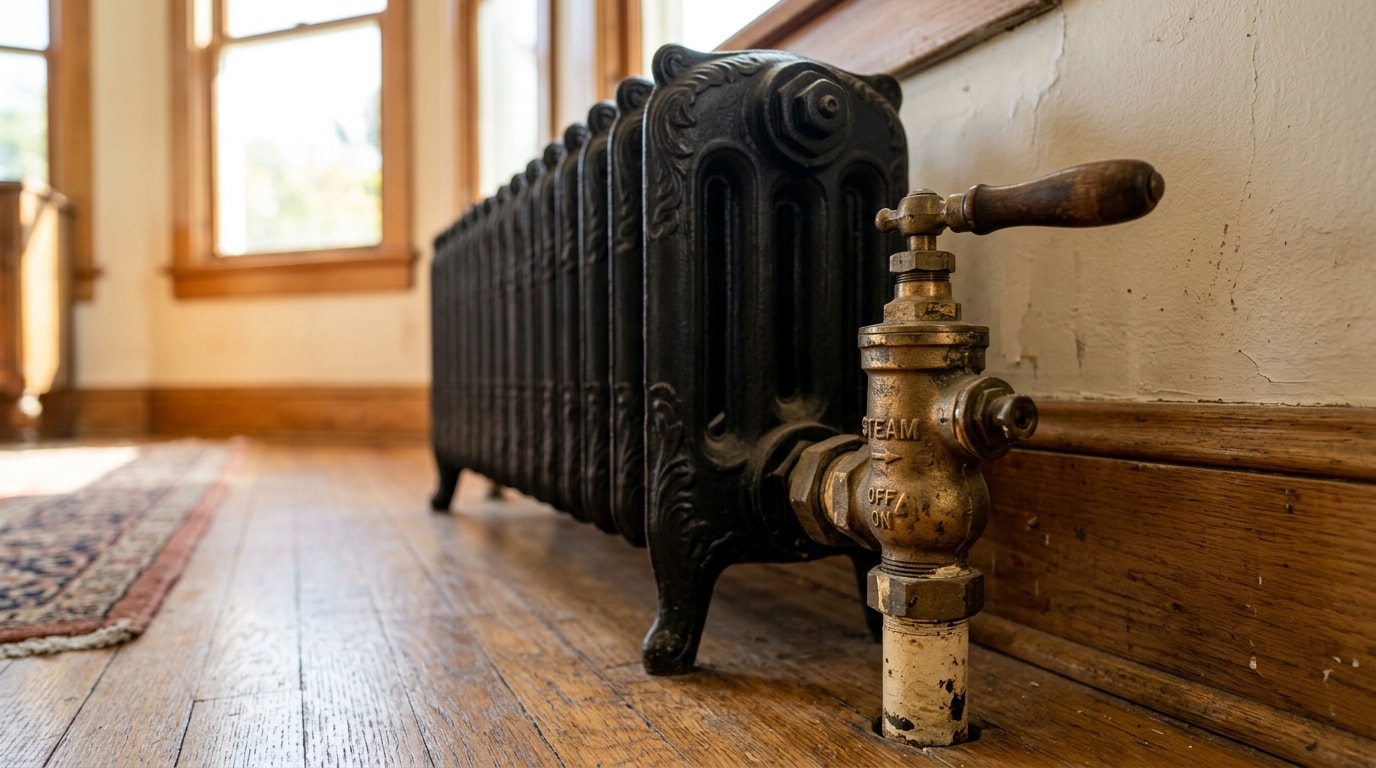
A hissing, dripping, or stuck steam radiator valve is one of the most common cold-weather calls we get from owners of Redwood City's older homes. Most of these houses still run original one-pipe steam systems, and the valves on them are decades past their design life. This guide covers the fixes that actually work, the ones that don't, and exactly when to stop turning wrenches and call a professional.
Steam Radiator Valve vs. Air Vent: Know the Difference First
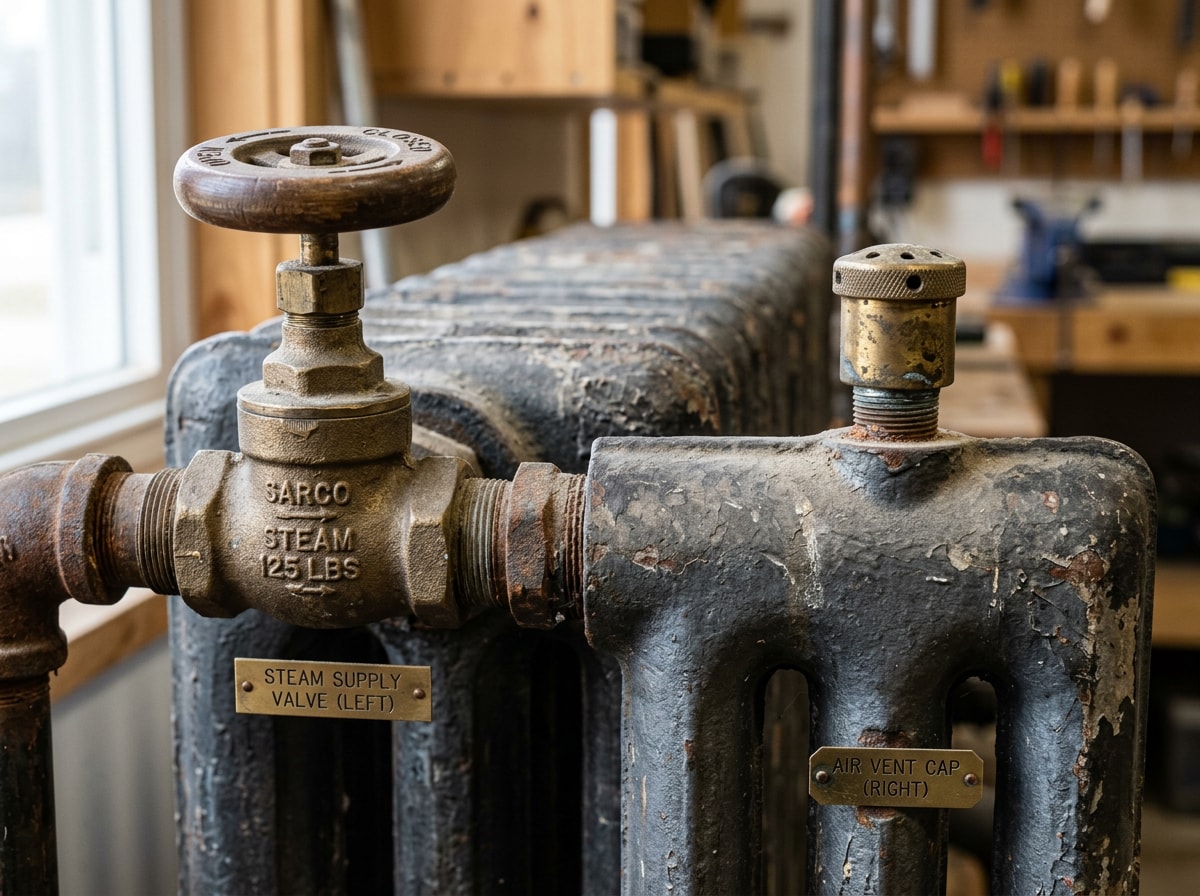
A steam radiator has two separate controls that homeowners routinely confuse. The supply valve starts and stops steam flow into the radiator. The air vent, a small cap on the opposite end, releases trapped air so steam can fill the unit. Mixing up the two is the number one reason DIY radiator fixes fail before they even start.
On a one-pipe steam system, the supply valve isn't built to throttle flow like a faucet. For one-pipe steam radiators, the valve should be kept all the way on or all the way off, since it's not designed to moderate the heat, and closing it partway leads to problems including a leaking valve. The air vent does the fine-tuning instead, controlling how fast air escapes and how quickly the radiator heats up.
Tools You'll Need Before You Start
Gather these before you touch a hot steam system:
- Adjustable wrench and channel-lock pliers
- A cloth or rag to protect your hands
- Graphite packing (rated for high heat)
- Teflon tape
- Screwdriver
- Replacement air vent
- Packing nut wrench (makes the repack job faster)
- Pipe dope for stubborn threaded leaks
Confirm the thermostat is off and the radiator has fully cooled before loosening anything. Steam components hold heat long after the system shuts down. If any of this sounds like more trouble than it's worth, our HVAC repair team handles steam and hydronic valve work across the Peninsula.
Fixing a Hissing or Whistling Steam Radiator Vent
Some hissing is normal. As a heating cycle starts, air escapes through the vent and the noise stops once the radiator heats up and the vent closes. A continuous hiss that doesn't stop once the radiator is fully hot is different: the vent has failed and needs replacing, not adjusting.
Replacing a Faulty Air Vent
Turn down the thermostat so the system isn't actively calling for heat. Find the air vent, the small valve-like cap opposite the main supply valve. Wrap Teflon tape around the threads of the new vent, then twist the old one out counterclockwise, using a cloth to protect your hand if it's still warm.
Before assuming a hissing vent needs replacement, check the radiator's pitch. Steam radiators and pipes need a slight slope to drain condensate properly and to help eliminate noise and water hammer. A radiator sitting level, or tilted the wrong way, can mimic a bad vent. A couple of thin shims under the legs opposite the valve sometimes solves the problem on their own.
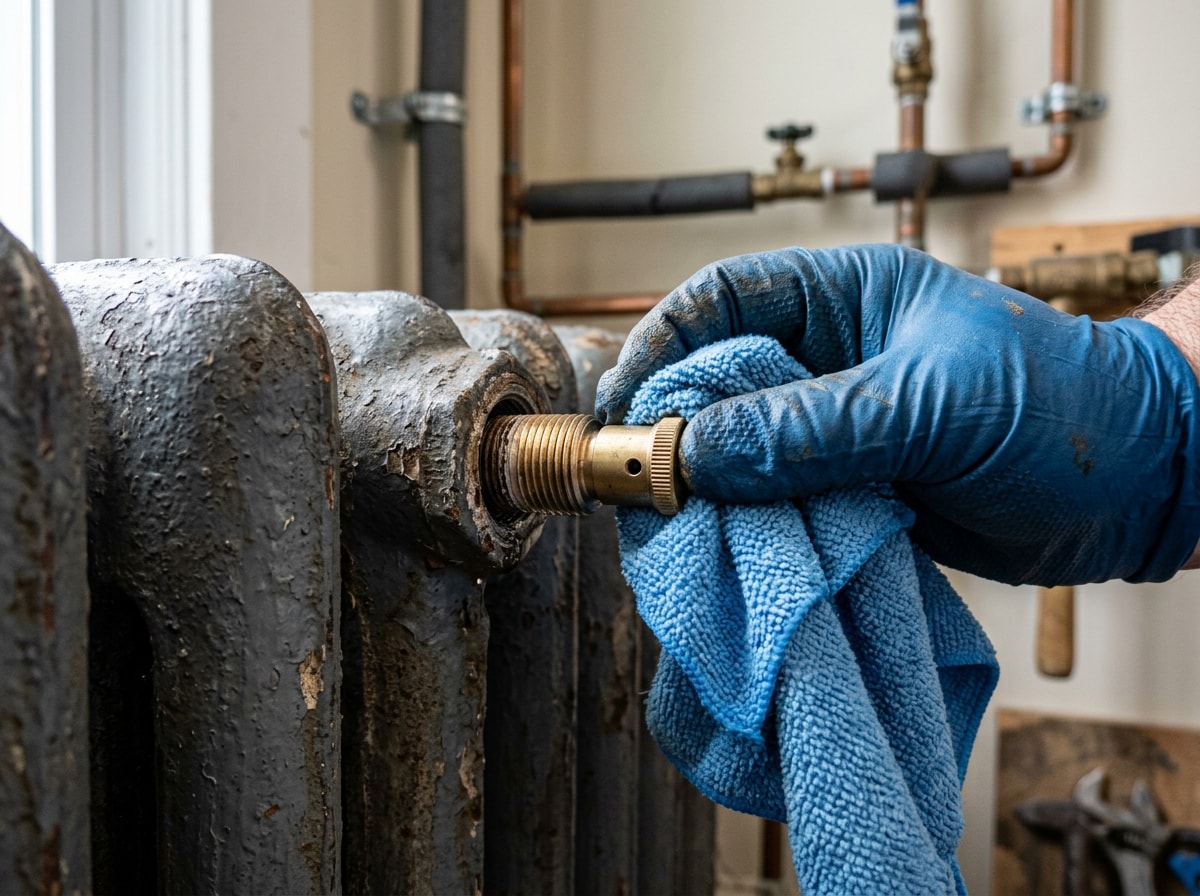
Fixing a Leaking Steam Radiator Valve Stem
A leaking valve is the most common complaint we hear, and it almost always comes down to worn packing material around the valve stem. Unlike a vent problem, this shows up even when the thermostat is off.
Check where the stem exits the valve body. If it feels warm or wet with the heat off, or the stem wiggles when you turn it, that's a clear sign that steam is coming right up through where the stem is, confirming the packing has failed and needs to be replaced.
Tightening or Replacing the Valve Packing
Start simple: snug the packing nut slightly with an adjustable wrench. That alone sometimes restores the seal. If the leak persists, repack the valve. To do that, remove the valve handle, use an adjustable wrench to loosen and remove the packing nut, then wrap graphite packing around the threaded portion of the valve stem to create a new seal. Slide the packing nut back on and tighten with a packing nut wrench.
If the valve stem keeps leaking even after fresh packing, there may be an underlying issue that needs professional attention, since persistent leaks can point to worn-out components or deeper problems in the steam system.
Here's how to triage the symptom quickly:
| Symptom | Likely Fix |
|---|---|
| Slight dampness, stem turns smoothly | Tighten the packing nut |
| Steady drip, stem still turns normally | Repack with graphite packing |
| Leak returns after repacking, or stem feels loose/corroded | Replace the valve or call a pro |
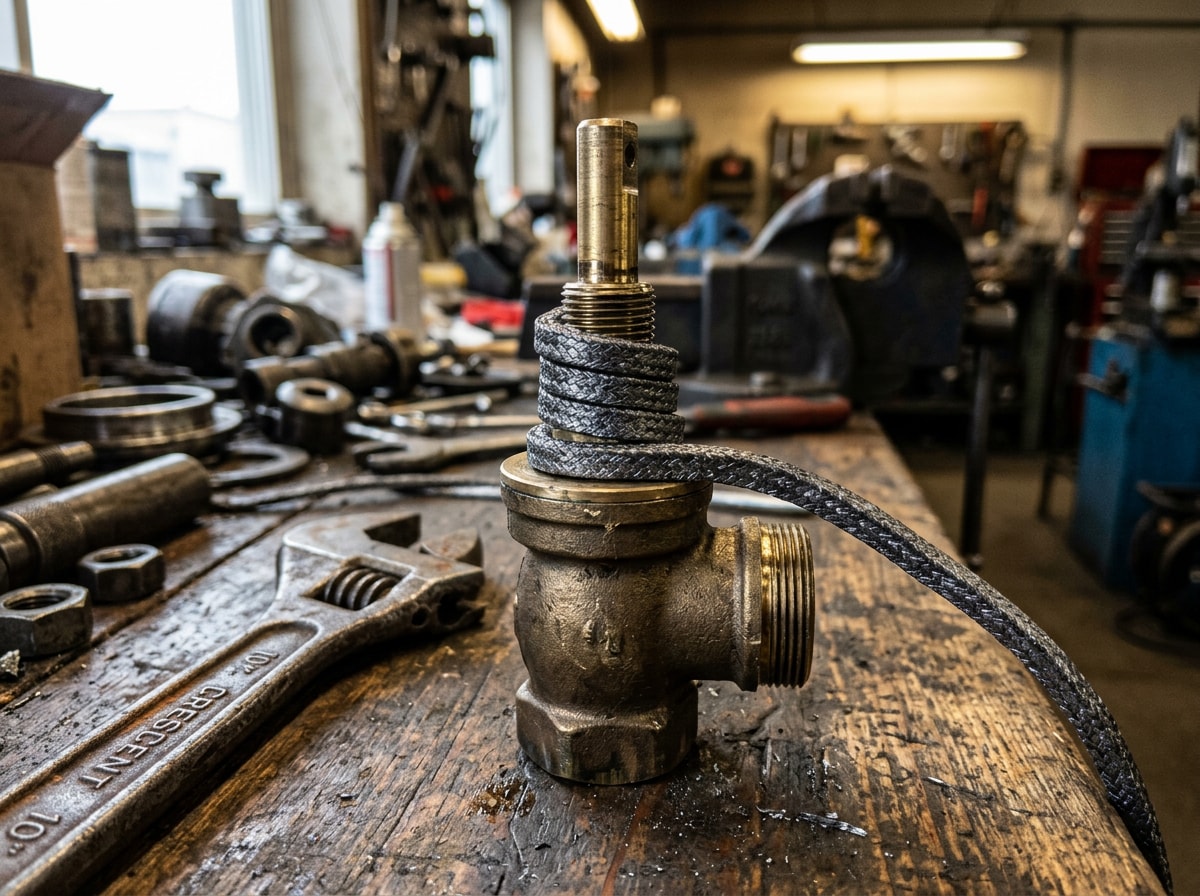
Graphite packing dust and hot valve bodies shouldn't be handled carelessly. OSHA guidance notes that exposed heated surfaces are treated as a hazard when there's potential for injury, and standards call for steam and hot-water pipes near walkways to be insulated or guarded against accidental contact. Give components real time to cool before you start.
Do You Need a Permit to Fix or Replace a Steam Radiator Valve in Redwood City?
This is where a lot of generic guides get it wrong for local homeowners, and it's worth getting right. Redwood City's adopted mechanical code exempts replacement of any minor part that doesn't alter the equipment's approval or make it unsafe from a separate permit requirement, which covers most valve packing jobs and vent swaps. Steam, hot, or chilled water piping within heating equipment already regulated by code is also generally exempt.
That changes once you're talking about swapping the valve body itself, replacing the boiler, or altering piping runs. Those jobs typically do require a permit and inspection through the city's Building Division. If you're unsure which side of that line your repair falls on, our HVAC maintenance service includes a diagnostic visit that can tell you before you open anything up.
Professional Heating Repair vs. DIY Attempts
Not every valve problem is a weekend project. Redwood City homes built before forced-air heating became standard, and there are plenty of them, often still run original steam or hot water boiler configurations. These systems reward technicians with real hydronic experience over a general handyman approach.
If you've tightened the packing nut, repacked the valve, and the leak keeps coming back, stop. The same goes for corrosion around the valve body or a valve that won't respond to normal turning. Pushing harder on a stuck or corroded valve risks snapping it off at the pipe, turning a small repair into a bigger one. Routine inspection and maintenance of steam traps and lines, catching leaks early, is the standard recommendation for keeping a steam system from reaching that point.
Boiler Issues Behind Steam Radiator Valve Problems
A technician addressing a steam radiator valve in a Redwood City home usually starts at the boiler, since valve symptoms sometimes trace back to pressure or circulation issues further up the system. Boiler-based heating is still common in the city's older neighborhoods, and it's not unusual to find a well-maintained unit quietly running for decades in a house built well before mid-century.
Common complaints include radiators that stay cold while the boiler runs, abnormal pressure gauge readings, visible leaks at the boiler body or piping, banging or gurgling noises, and short-cycling. These usually trace back to a failing circulator pump, a waterlogged expansion tank, a stuck zone valve, heat exchanger wear, or a faulty pressure-reducing valve. Diagnosing hydronic systems accurately takes real experience, since several of these causes can produce nearly identical symptoms at the radiator.
If your home relies on an older boiler or a different fuel source entirely, our guide to oil heating systems in Palo Alto covers similar age-related maintenance and replacement questions that apply across most pre-1960s Peninsula homes.
Why Redwood City Homeowners Choose Made Simple Heating and Air
Diagnostic accuracy matters more than it seems. When a boiler isn't performing, the cause could be a circulator pump, a zone valve, an expansion tank, a gas valve, a thermocouple, a pressure issue, or heat exchanger wear, and each one requires a different repair. In our service calls across Redwood City's Craftsman bungalows and older multi-family buildings, the valve itself is rarely the whole story; it's usually the first symptom of something happening at the boiler.
A technician who narrows that list down quickly, rather than guessing and swapping parts, saves homeowners both time and money. That diagnostic-first approach is why local hydronic heating specialists get repeat calls across Redwood City and neighboring Peninsula communities. For routine upkeep instead of a repair, our furnace maintenance plans also cover central heating systems paired with older radiator setups.
If your valve, vent, or boiler isn't behaving, get a free estimate and we'll walk you through what's actually going on before any work starts. You can also browse our full range of heating services from the Made Simple Heating and Air homepage.
FAQ
Should a Steam Radiator Valve Be Fully Open or Closed?
Yes. A steam radiator supply valve should always be fully open or fully closed, never partially open. Leaving it partway causes banging, clanging, or uneven heating because the valve isn't designed to throttle steam flow like a faucet.
Why Is My Steam Radiator Valve or Vent Hissing?
A short hiss as the radiator warms up is normal; it's trapped air escaping through the vent. A continuous hiss or whistle after the radiator is fully hot means the air vent has failed and needs replacement, not adjustment.
Can I Replace a Steam Radiator Valve or Vent Myself?
Replacing an air vent or repacking a valve stem is a reasonable DIY job with basic tools, as long as the system is fully cooled first. Replacing the valve body itself, or any work that touches the boiler, is better left to a licensed technician.
Do I Need a Permit to Repair a Steam Radiator Valve in Redwood City?
Usually not for packing or vent replacement, since minor part replacement that doesn't change the equipment's safety rating is typically exempt under the city's adopted mechanical code. Full valve body replacement or boiler work may require a permit; check with the Building Division if you're unsure.
What Should I Do Before the Technician Arrives?
Note when the symptoms started and what you've noticed: hissing, dripping, or a cold radiator. If a valve is actively leaking, shut down the system rather than forcing a stuck valve, which can cause further damage.
How Much Does It Cost to Repair or Replace a Steam Radiator Valve?
Costs vary by job scope and local labor rates. A simple repack usually runs on the lower end of a typical service call, while a full valve replacement costs more. Confirm current Redwood City pricing directly with a local heating contractor, since national averages don't always reflect regional labor rates.